
Comparison guide · Tudor vs Rolex
Tudor or Rolex: what actually differs, and what does not.
A plain comparison for a buyer weighing a Tudor against the Rolex it is usually compared with: ownership, movements, finishing, the model pairs, availability, and how each trades pre-owned. No prices.
- Black Bay Fifty-Eight against Submariner, Pelagos against Sea-Dweller, Black Bay GMT against GMT-Master II
- In-house calibres on both sides, METAS certification on recent Tudors
- What the dealer buys, trades, and sources from both brands
Who this guide is for
A different watch, not a discount.
This guide is for a buyer who likes a Rolex, has looked at the Tudor beside it, and wants to know what the difference really is. The short answer: Tudor is a separate brand under the same ownership, with its own movements, steel, finishing, and dealers. It is not a Rolex at a lower price.
What follows stays with what a reader can check: the two companies, the calibres, the four model pairs most buyers compare, case and bracelet differences, retail availability, and how each trades pre-owned, in direction only.
The last section is mine. I buy, trade, and source both brands, so it explains what that means if you own a Tudor and want the Rolex, or the other way around.
How to decide
Four steps from Tudor or Rolex to an answer.
01
Name the Rolex you actually want
Start with the reference, not the brand. A Submariner points to the Black Bay Fifty-Eight, a Sea-Dweller to the Pelagos, a GMT-Master II to the Black Bay GMT, an Explorer to the Ranger.
02
Handle both
Size, bezel material, bracelet, clasp, and finishing differ in ways you can feel in a minute on the wrist. Try both before deciding.
03
Tudor now, or the Rolex later
A Tudor is generally available at retail. A steel Rolex sport model generally is not, so the realistic Rolex route is pre-owned: new Tudor now, or pre-owned Rolex later.
04
Plan the trade
Many Tudor owners move to the Rolex later and use the Tudor as the deposit. Keep the card and box.
The detail
Tudor and Rolex, point by point.
One founder, two companies
Hans Wilsdorf founded Rolex and then registered Tudor as a second brand, built to Rolex standards at a lower price. For decades Tudor used Rolex Oyster cases, crowns, and bracelets around movements from outside suppliers. Both brands still belong to the Hans Wilsdorf Foundation, but today they are separate companies with their own design teams, manufactures, calibres, and dealers. A modern Tudor shares no case or movement with a modern Rolex.
Movements: both in-house now
Tudor introduced its own MT56xx calibres in 2015 and rolled them across the Black Bay range from 2016: COSC-certified, with a silicon hairspring and a long power reserve. A few smaller and heritage references still use supplied calibres, so check the reference. Recent Tudors go further: the Black Bay Ceramic and the current Black Bay 41 carry METAS Master Chronometer certification, the same independent test Omega uses.
Rolex fits its own calibres across the whole range and tests each finished watch to its Superlative Chronometer standard, an in-house test applied after COSC. Both are reliable; Rolex regulates to the tighter spec.
The four pairs most buyers compare
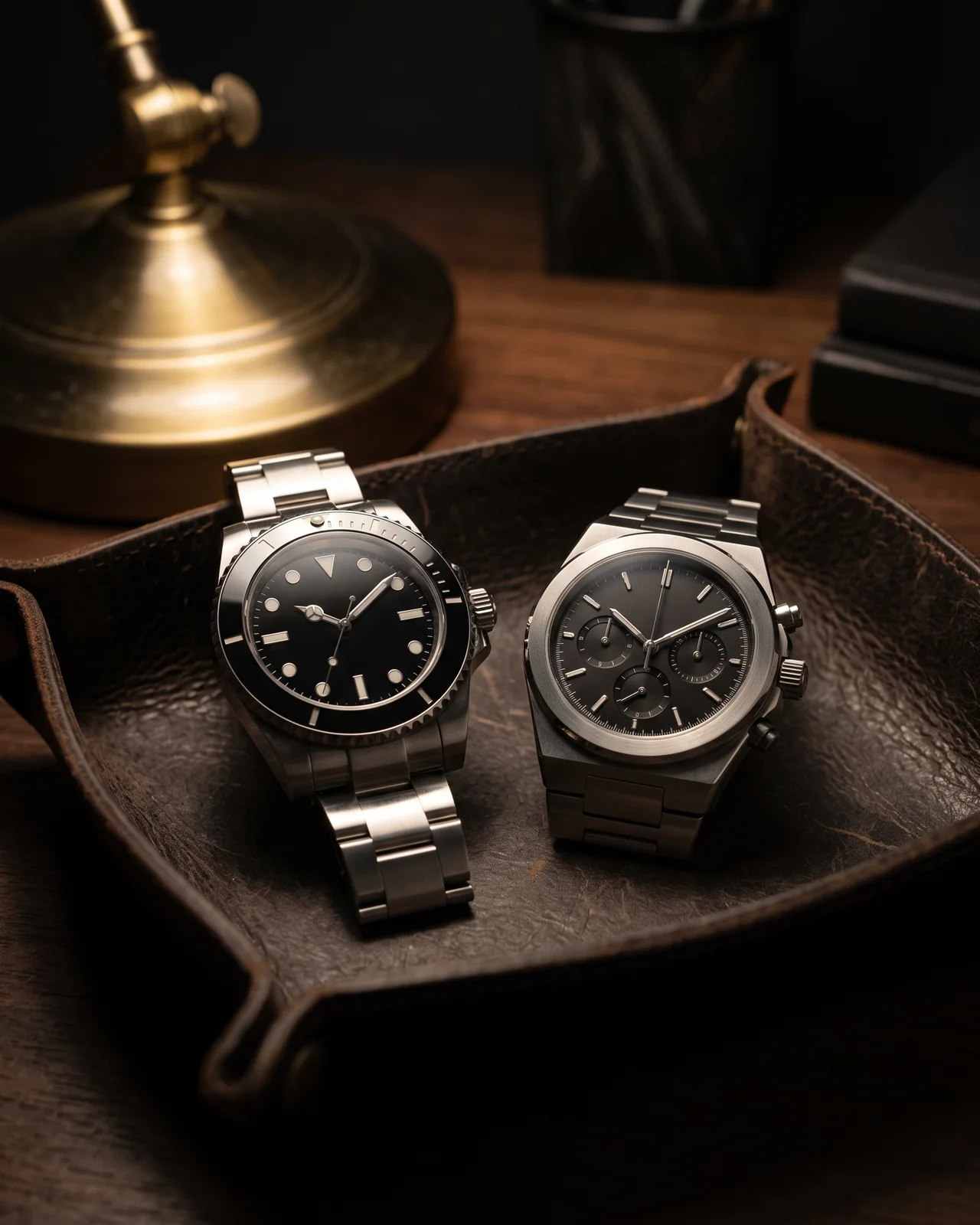
Black Bay Fifty-Eight against Submariner. The Tudor is 39 mm with an aluminium bezel and a riveted-style bracelet, and wears smaller and more vintage. The Rolex is 41 mm with a Cerachrom bezel and the Glidelock clasp, and wears larger and more polished.
Pelagos against Sea-Dweller. The Pelagos is titanium, 42 mm, with a ceramic bezel and a clasp that adjusts as a wetsuit compresses: the lighter, more technical tool. The Sea-Dweller is steel, 43 mm, rated far deeper, with a Cyclops date: the heavier, more recognised one.
Black Bay GMT against GMT-Master II: both have an independently set local hour hand, aluminium bezel on the Tudor, Cerachrom on the Rolex. Ranger against Explorer: both plain field watches with a 3, 6, 9 dial, the Explorer with the finer bracelet and clasp.
Case finishing, steel, and bracelets
Rolex uses its own Oystersteel, a 904L alloy, finished bright and consistent with crisp transitions between brushed and polished surfaces. Bracelets carry the Easylink or Glidelock extension, and sport bezels are Cerachrom ceramic, which does not fade.
Tudor uses 316L steel with clean but simpler finishing. Most bezels are anodised aluminium, which can scratch and fade; the Pelagos and Black Bay Ceramic use ceramic. Bracelets have the riveted look of the old Tudor divers, newer references carry the T-fit clasp, and Tudor offers fabric straps woven on jacquard looms.
Buying at retail
A Tudor is generally available: the Black Bay Fifty-Eight you want is likely in the case at a dealer, with a full warranty from today. A steel Rolex sport model is generally allocated, with a wait and no fixed date. Pre-owned changes the picture: a recent Submariner or GMT-Master II with its card is available any week. The Rolex is out of reach new, not out of reach, so the real question is new Tudor against pre-owned Rolex.
Warranty and service
Both brands give a five-year warranty on current production, dated from the card. Rolex suggests a service roughly every ten years on current calibres. Tudor's in-house calibres are built for long intervals too. Parts for both stay within the brand networks.
How each trades pre-owned
In direction only. Rolex steel sport references tend to hold close to their retail price on the secondary market and have at times sold above it, so a well-kept example with its card is generally a fast sale. Tudor generally sells below retail once pre-owned, which is normal for almost every brand other than Rolex, and it is why a pre-owned Tudor is good buying. Tudor is also liquid: a clean Black Bay or Pelagos with its card moves quickly at the right number.
Is a Tudor a cheaper Rolex?
No. The two brands share an owner and a history, and that is where the overlap ends. A Tudor has its own movement, steel, finishing, and place in the market. Buy a Tudor because the Fifty-Eight is the size you want, the Pelagos is the better dive tool, or you want a new watch now. It was never meant to feel or trade like a Rolex.
Tudor now, or save for the Rolex
If the Rolex you want is a steel sport model and you will not buy pre-owned, the Tudor is the watch you can wear this year. If you will buy pre-owned, compare directly: a new Tudor with a full warranty against a recent Rolex with its card. If the Rolex is the one you keep thinking about, the Tudor rarely stops the thought.
What I buy, trade, and source from both brands
I buy and sell both brands, and I source what is not in the case. Own a Tudor and want the Rolex it was compared with? Send photos and I credit the Tudor toward a Submariner, GMT-Master II, or Sea-Dweller in stock or one I find. Own a Rolex and want a Tudor plus cash back? The same applies. Have these ready:
- The reference number, and the calibre if it is on the papers.
- The warranty card, and the METAS card if the watch came with one.
- Box, spare links, straps, and service records, or a note that you do not have them.
- Which direction: sell, trade, or source.
Side by side
Tudor and Rolex at a glance.
Facts a buyer can check, with market behaviour in direction only.
| Criteria | Tudor | Rolex |
|---|---|---|
| Ownership | Hans Wilsdorf Foundation; separate company | Hans Wilsdorf Foundation; the original brand |
| Movements | In-house MT56xx since 2015, COSC; a few supplied | In-house calibres across the range |
| Certification | COSC; METAS on recent models | Superlative Chronometer, Rolex's own test after COSC |
| Steel and finishing | 316L; clean, simpler finishing | Oystersteel (904L); finer, more polished finishing |
| Bezels | Aluminium on most; ceramic on Pelagos and Black Bay Ceramic | Cerachrom ceramic on sport models |
| Bracelets and straps | Riveted-style bracelet, T-fit clasp, fabric straps | Oyster or Jubilee, Easylink or Glidelock |
| Retail availability | Generally available at dealers | Steel sport models generally allocated |
| Warranty | Five years on current production | Five years on current production |
| Pre-owned behaviour | Generally sells below retail; liquid at the right price | Tends to hold close to retail; fast to sell |
| Suits a buyer who | Wants a new tool watch now, titanium, or a smaller case | Wants the recognised reference and the easier sale |
Directions, not figures. Reference, condition, and cards move every row.
Questions, answered
Tudor or Rolex, in short
Which should I buy, a Tudor or a Rolex?
Buy the Tudor if you want a new tool watch now, a smaller case, or titanium. Buy the Rolex if you want the recognised reference and the easier sale later, and you can buy pre-owned or wait.
Is a Tudor a cheaper Rolex?
No. Tudor shares an owner with Rolex and once used Rolex cases, but a modern Tudor has its own movement, steel, finishing, and dealers. It is a different watch, not a discounted one.
Can I trade my Tudor toward a Rolex?
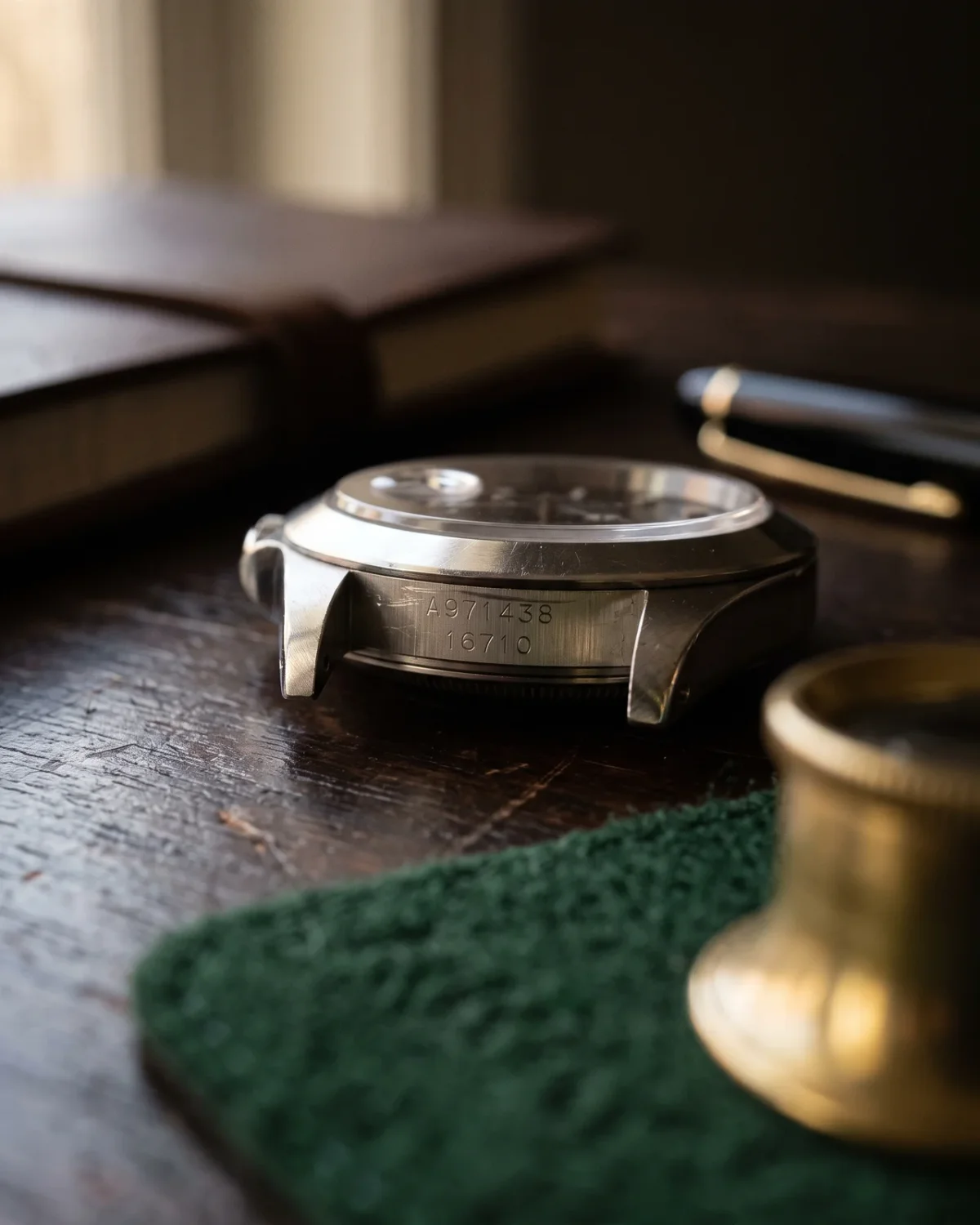
Yes. I credit the Tudor against a Rolex in the case or one I source. Send photos of the dial, case back, and cards, and I reply within 1 business day with the credit.
Which is easier to sell later, a Tudor or a Rolex?
Generally the Rolex, if it is a steel sport reference with its card, because its price tends to stay closer to retail. A Tudor sells quickly too, usually at more of a discount.
The pairs
Four matchups that cover most of the decision.
Each pair does the same job. The differences are size, materials, finishing, and resale.
Black Bay Fifty-Eight and Submariner
39 mm, aluminium bezel, riveted-style bracelet, no date on the Tudor. 41 mm, Cerachrom bezel, Glidelock clasp, date or no-date on the Rolex.
Pelagos and Sea-Dweller
Titanium, 42 mm, ceramic bezel, self-adjusting clasp on the Pelagos. Steel, 43 mm, a far deeper rating, a Cyclops date on the Sea-Dweller.
Black Bay GMT and GMT-Master II
Both have an independently set local hour hand. Aluminium two-colour bezel on the Tudor; Cerachrom, and Oyster or Jubilee, on the Rolex.
Ranger and Explorer
Plain field watches with a 3, 6, 9 dial. The Ranger is 39 mm on a bracelet or fabric strap. The Explorer is 36 or 40 mm with a finer bracelet and clasp.
Ownership
What each brand gives its owner.
The things owners of each brand tend to value most.
Tudor: available this month
Most references are in the case at a dealer, in the colour you want, with a full warranty.
Tudor: built as a tool
Titanium on the Pelagos, a true travel hand on the Black Bay GMT, and fabric straps made for use.
Tudor: modern in-house calibres
COSC-certified MT56xx movements with a silicon hairspring and a long power reserve; METAS-tested on recent models.
Rolex: recognised anywhere
The shapes have barely changed in decades. A Submariner or GMT-Master II reads as what it is across a room.
Rolex: the easier sale
Steel sport references tend to hold close to retail and sell quickly.
Rolex: finishing and materials
Oystersteel, Cerachrom bezels that do not fade, clasps milled from solid steel.
Sell, trade, or source
Own one, want the other? Start here.
I buy, trade, and source Tudor and Rolex. Send photos of what you have, or tell me what you want, and I reply within 1 business day.