
Sell your Panerai · South Florida · by appointment
Sell your Panerai to a dealer who reads the PAM number first.
Luminor, Luminor 1950, Radiomir, Radiomir 1940, Submersible, or Luminor Due: send photos, the PAM reference, and the card. I reply within 1 business day with a real number and the reasoning.
- Every Panerai authenticated by hand, no third-party hand-off
- Case family, size, and movement origin priced as separate markets
- Prepaid FedEx label, insured to declared value, USA only
- Wire or check within 24 hours of inspection
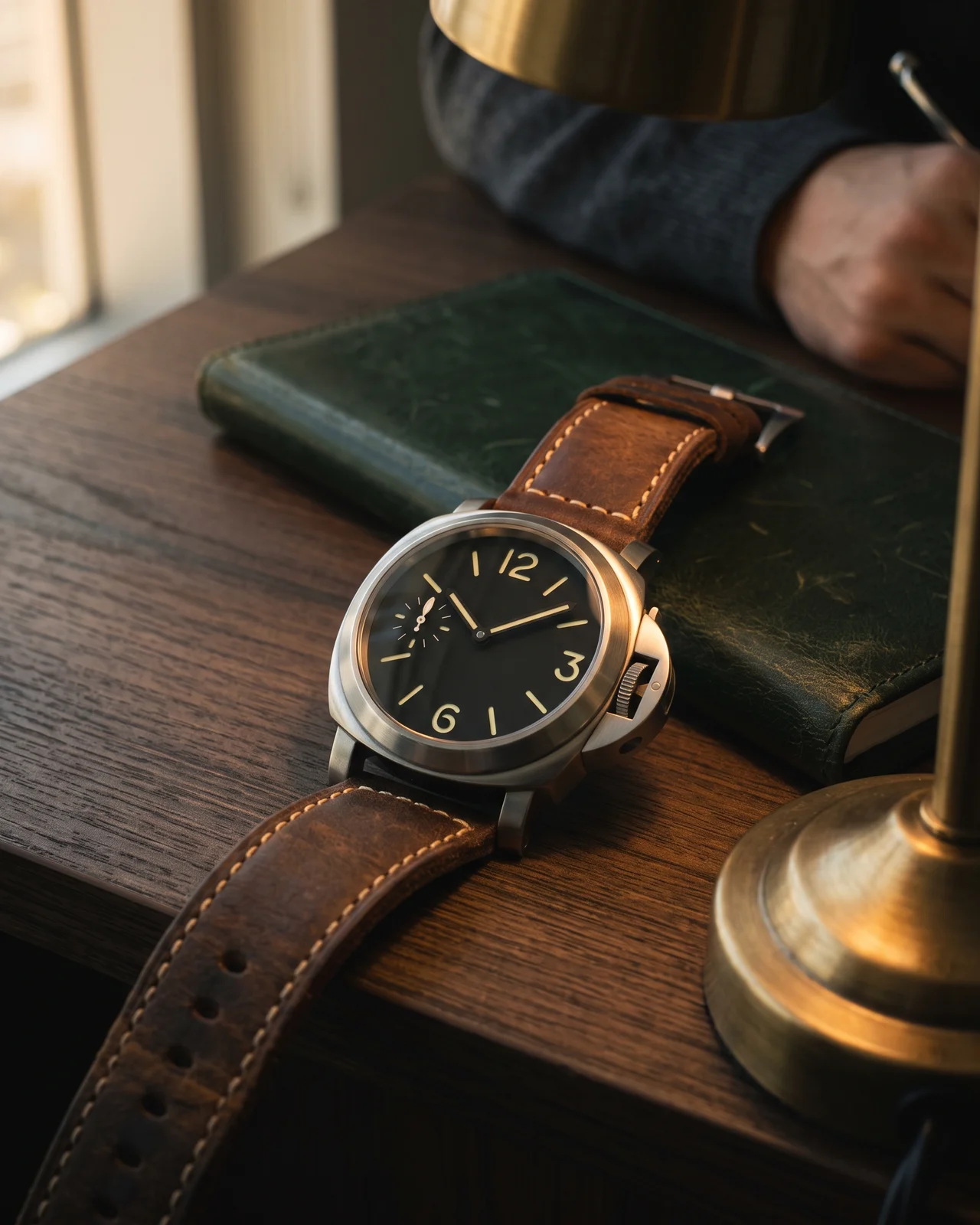
Who this page is for
A PAM number, a case family, a size, a movement. Then a number.
Most Panerai sellers I meet own one watch and know it by its PAM number or by the shape of the case. Some kept every strap. Some inherited a 44 mm Luminor and are not sure what is inside it. Some have a marketplace quote and want a second opinion from a person.
Panerai value is organised on a grid: the PAM reference, the case family, the case size from 38 to 47 mm, and whether the movement is a supplied Unitas or ETA calibre or one of Panerai's own. Then the dial, the strap set, the card, and condition. I buy Panerai across all of its case families, and this page explains what I look at and why.
I do not post prices here. Panerai references come and go quickly, and the market for a given PAM moves with them. Send the details and you get a real figure with the reasoning.
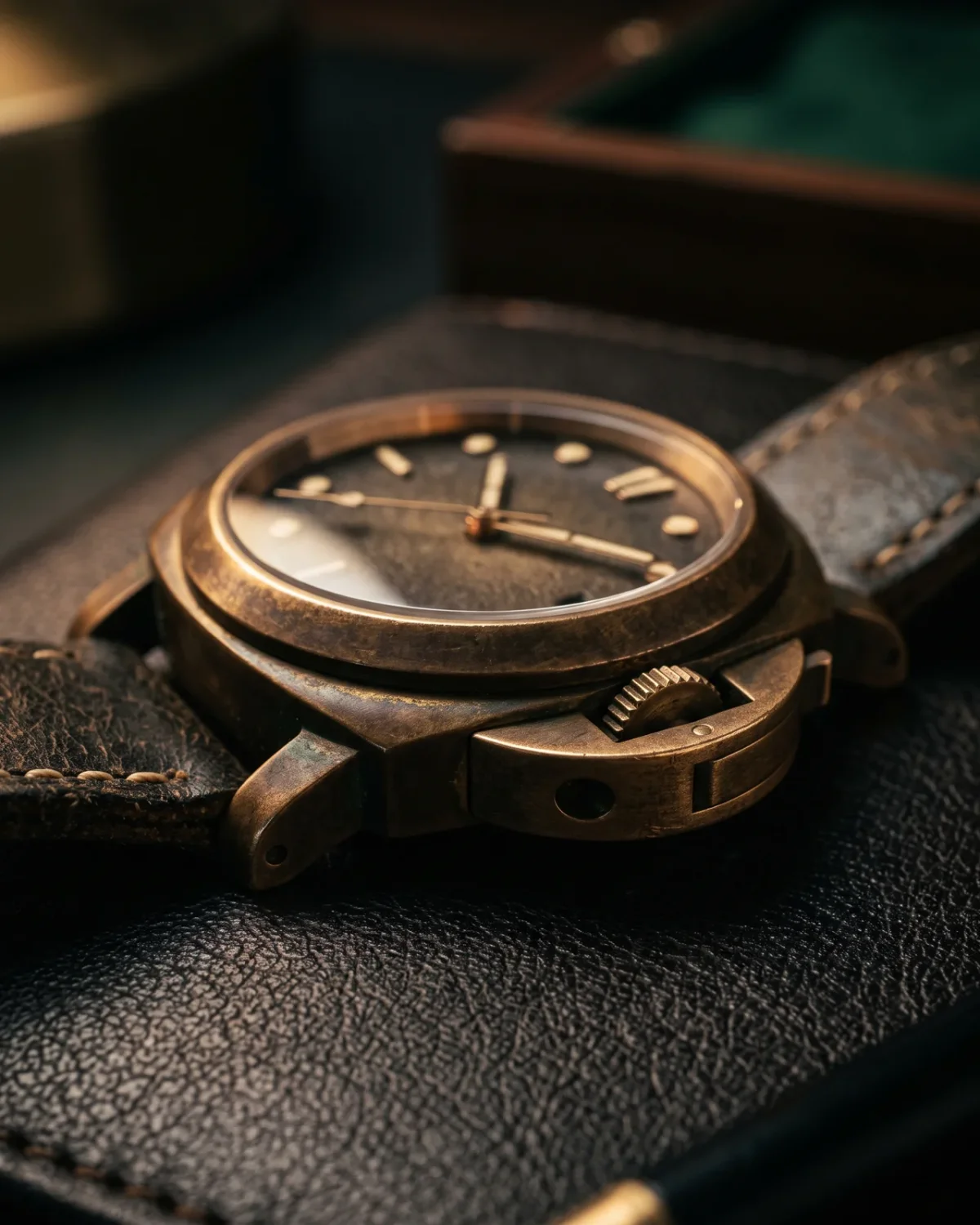
Selling a Panerai to a private dealer
What changes when one person reads the whole watch.
The PAM number, read first
The reference tells me the family, the size, the dial, and the calibre before I see the watch. I confirm it against the card and the caseback engraving.
Case families, priced apart
A Luminor, a Luminor 1950, a Radiomir, and a Submersible in the same size are not comparables for each other. I price each against its own family.
The strap set counts
Many references shipped with a second strap, a spare buckle, and the strap-changing tool. The next buyer asks for them.
Inspected by hand
I check the case, lever, movement, engraving, and card myself. Nothing goes to a grading team.
Paid within a day
Wire or check within 24 hours of inspection. You choose the method before the watch ships.
What I check on a Panerai
Six things that decide the offer.
Each one moves the number up or down. I say which way in the reply.
The caseback engraving
Older casebacks carry the OP number, the serial, and a letter that places the year. Newer ones often add the PAM reference. All of it should agree with the card.
Sandwich or printed dial
A sandwich dial has cut-out numerals over a lume plate; a printed dial carries the lume on top. The two trade differently, and a swapped dial is settled first.
Movement origin
Hand-wound OP calibres on Unitas bases, ETA-based automatics, or Panerai's own P.2002, P.9000, P.3000, P.9010, and P.900. The display back usually shows me which.
Limited and special editions
Numbered casebacks, boutique editions, Marina Militare and Black Seal dials trade on the edition and the paperwork.
Cushion case, lever, and crown guard
The lever wears at the pivot and the bridge. The cushion case loses its brushed flats to a polish. I read both first.
Card, registration, and service
The warranty card with the matching serial, a PAM.GUARD registration if you made one, and Panerai service papers. Each changes the number.
How it works
Four steps. Real numbers.
01
Get an offer
Submit the form with photos: dial straight on in daylight, the caseback engraving, the crown-guard side with the lever closed, the strap and buckle, the second strap and the tool if you have them, and the card beside the watch. I reply within 1 business day.
02
Ship or meet
Take the prepaid, insured FedEx label, or book an appointment in Miami-Dade, Broward, or Palm Beach. A pre-Vendôme piece I would rather see in person.
03
Inspect and confirm
I open the box on camera and check the engraving against the card, the dial, the lever, the movement, and the straps. If it matches the photos, the offer stands.
04
Get paid
Wire or check within 24 hours of inspection. If we do not agree, the watch goes back to you, insured, at my cost.
Supplied or in-house
Two kinds of Panerai movement, and what each buyer looks for.
Neither column is the lesser watch. They are judged on different things.
| Criteria | Supplied calibre: OP on Unitas, ETA | In-house: P.2002, P.9000 and later |
|---|---|---|
| Typical references | PAM 111, 112, 104, 005, 024, and most pieces before roughly 2009 | PAM 312, 372, 1312, 1392, 959, and most pieces after |
| How I tell | A 6497 base or an ETA automatic through the display back | A P-numbered calibre on the movement and on the card |
| Power reserve | Roughly two days | Three days, eight days, or more |
| Case | Original Luminor and Radiomir cases, thinner | Luminor 1950 and Radiomir 1940 cases, thicker, domed sapphire |
| Service | Any competent watchmaker handles a Unitas or ETA base | Panerai service, with papers that carry weight |
| What the buyer pays for | The original dial, a tight lever, the thin case | The card, the service history, the full strap set |
A hand-wound OP calibre is not a lesser Panerai; the 44 mm pieces it powers are the ones most people picture when they hear the name. Directions, not figures.
The detail
What moves a Panerai offer, and why.
How to read a PAM number
Every modern Panerai carries a PAM reference, printed on the warranty card and the box tag. Older casebacks carry an OP number and the serial, with a letter that places the watch in its production year; newer casebacks often add the PAM itself. Send me whichever you can read. The reference tells me the family, the size, the dial, and the calibre before I open the box, and the engraving tells me whether the watch agrees with its paperwork.
The case families, the sizes, and the crown-guard lever
The Luminor is the flat-sided cushion case with the crescent lever over the crown. The Luminor 1950 is rounder and thicker, with a domed crystal, and carries most of the in-house references. The Radiomir has wire lugs, a screw-down crown, and no guard. The Radiomir 1940 keeps the cushion shape with solid lugs. The Submersible adds a rotating bezel and has been its own line since 2019. The Luminor Due is the thin, dressier case with a lower water rating.
Most demand sits at 42 and 44 mm. The 40 mm references of the early 2000s have a following of their own; 45 mm Radiomirs and 47 mm pieces draw a smaller, more serious pool. I buy all of them and price a 47 against 47s. On any case with a lever, I check that it closes with a click and that the pivot and bridge are tight.
Sandwich dials, printed dials, and the lume
A sandwich dial is two plates: a lume layer under a top plate with the numerals cut out, so the lume sits in recesses. A printed dial carries the lume on the surface. Both are correct on the references that came with them, and the two trade differently within a family. A dial that does not belong to the reference lowers the offer, so photograph it straight on in daylight.
Movement origin by era
For its first years after the 1997 relaunch, Panerai used supplied calibres: hand-wound OP movements built on the Unitas 6497 and automatics on ETA bases. The in-house P.2002 eight-day arrived around 2005, the P.9000 three-day automatic around 2009, then the P.3000, the P.4000 micro-rotor, the P.9010 from about 2016, and the P.900. The caseback and the card tell me which. What matters is that the movement is the one the reference should have.
Limited editions and the numbered caseback
Panerai numbers its limited and special editions on the caseback and sells boutique and themed pieces on top of the catalogue. The number alone does not set the offer; the edition, the paperwork, and the box do. A pre-Vendôme piece, made before the 1997 relaunch, is a separate market, and one I look at in person only.
Straps, buckles, and the strap-changing tool
Most Luminor and Radiomir 1940 cases hold the strap on screw bars, and the box included a screwdriver and often a second strap and buckle. Wire-lug Radiomirs change straps their own way. An aftermarket strap is fine; say whether the original strap, buckle, and tool are with it.
The card, the polish, and Panerai service
A warranty card with the serial and a dealer stamp is the most useful document you can send. If you registered the watch for the extended warranty, say so. Do not polish the case: the brushed flats and sharp transitions on a cushion case are what a buyer looks for, and a polish softens them. Panerai service papers help; an unrecorded service is priced as unknown.
When selling to me is not the right call
If you have months to spare and want to chase the highest possible private-sale price, a dealer offer will sit below what a patient seller might get. If the watch is a replica, and Panerai is copied often, I will tell you and will not buy it. If it was your father's and you are undecided, keep it. If you want a clean, insured, documented sale from one person who can explain the number, that is what I do.
How to prepare your submission
- Photos in daylight: dial straight on, the caseback engraving, both sides of the case with the lever closed, the strap and buckle.
- The warranty card beside the watch, serial visible, or say it is missing.
- The PAM number if you know it, and the year of purchase.
- The second strap, spare buckle, and strap-changing tool, or say which is missing.
- Service history, or say that you do not know, and whether you ship on my label or meet in person.
Questions, answered
Before you send a Panerai
Do you buy Panerai watches?
Yes: Luminor, Luminor 1950, Radiomir, Radiomir 1940, Submersible, and Luminor Due, from 38 to 47 mm. Send the PAM number and photos.
Where do I find my PAM number?
On the warranty card and the box tag. Newer casebacks often carry it too; older ones show the OP number and serial, and I can identify the PAM from those.
Is an in-house Panerai worth more?
Not as a rule. In-house calibres have a larger pool of buyers; the hand-wound 44 mm pieces on Unitas bases have a loyal one. Reference, condition, and set decide more.
Do you buy the 47 mm sizes?
Yes. The pool of buyers is smaller, so I price a 47 against other 47s and tell you what that means.
What if I have no card?
I still appraise the watch. The offer leans harder on the caseback engraving and the inspection, and I tell you how much the missing card matters for your reference.
Should I polish it before selling?
No. The brushed flats and sharp edges of a cushion case are what collectors pay for, and a polish removes them.
Sell your Panerai
A real number on your Panerai, in 1 business day.
Send the dial, the caseback, the lever side, the straps, and the card. I identify the reference, explain the offer, and pay within 24 hours of inspection. Shipping is insured and on me.