
Sell your Day-Date · South Florida · by appointment
Sell your Day-Date to a dealer who prices the watch, not just the gold.
Every Day-Date is precious metal, so every offer starts from a metal floor. The dial, the stones, the President bracelet, and the generation move it from there. Send photos and the card. I reply within 1 business day with a number and the reasoning.
- Yellow, white, and Everose gold, and platinum, 36 mm and 40 mm
- Stone dials, factory diamonds, and aftermarket stones each priced on their own terms
- Estate pieces welcome, with or without papers, by appointment in your county
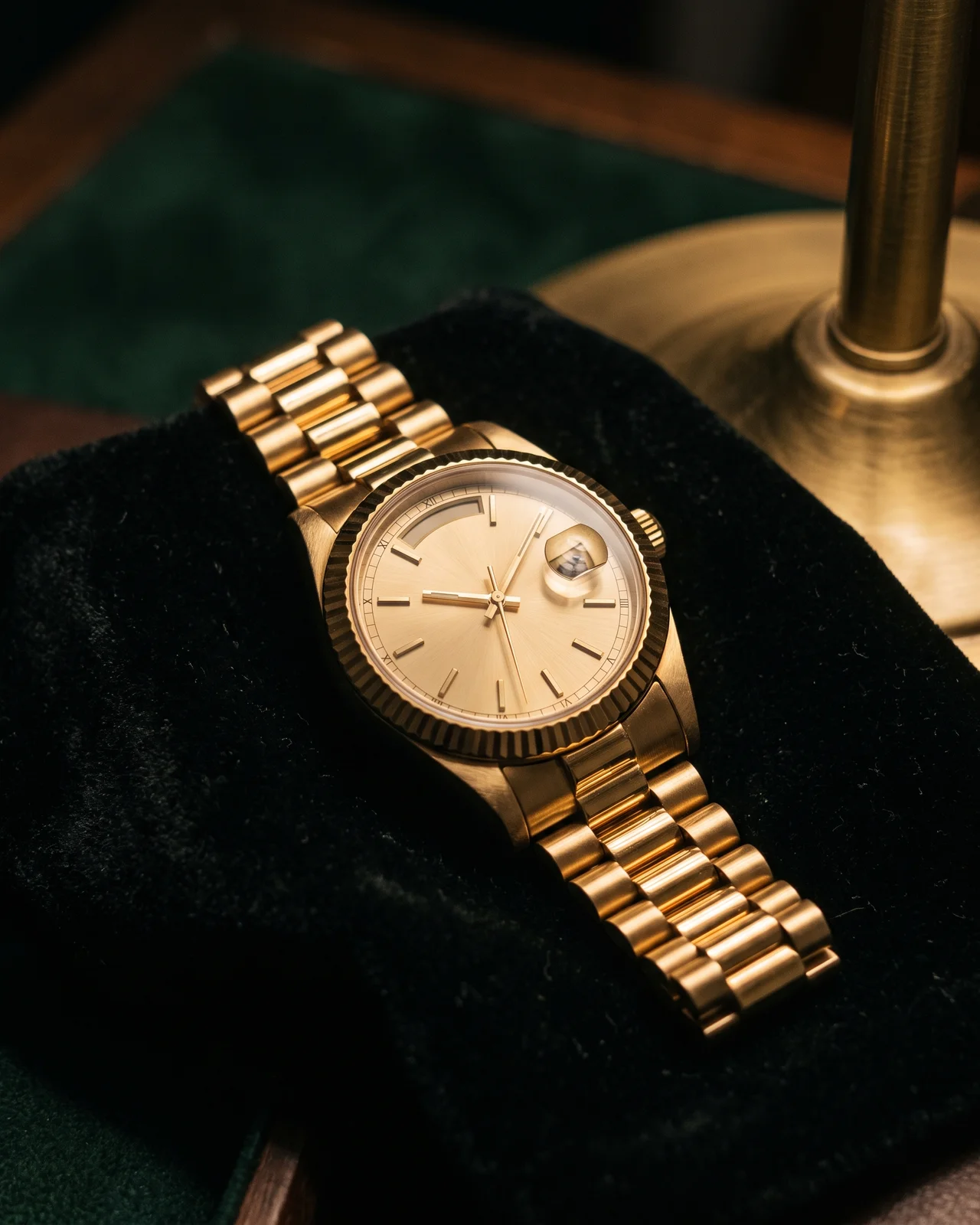
Who this page is for
Most Day-Dates I see come from a drawer, not a boutique bag.
This page is for the person holding a Day-Date and asking the two questions I hear most: is it worth more as a watch than as gold, and do the diamonds help or hurt. Many of these watches are inherited. Many were worn daily for decades.
The Day-Date has been made only in gold or platinum since 1956, which makes it unlike any other Rolex I buy. A steel Submariner is worth what collectors will pay. A Day-Date is worth at least its metal, and the question is how far above that floor the specific watch sits. A plain champagne 18238 and a factory diamond-dial 118238 answer that differently.
Below I separate the 36 mm and 40 mm lines, the metals, the dial types, factory versus aftermarket stones, and what a stretched President does to the number. Serial eras, card versus papers, and polishing in general stay on the Rolex page.
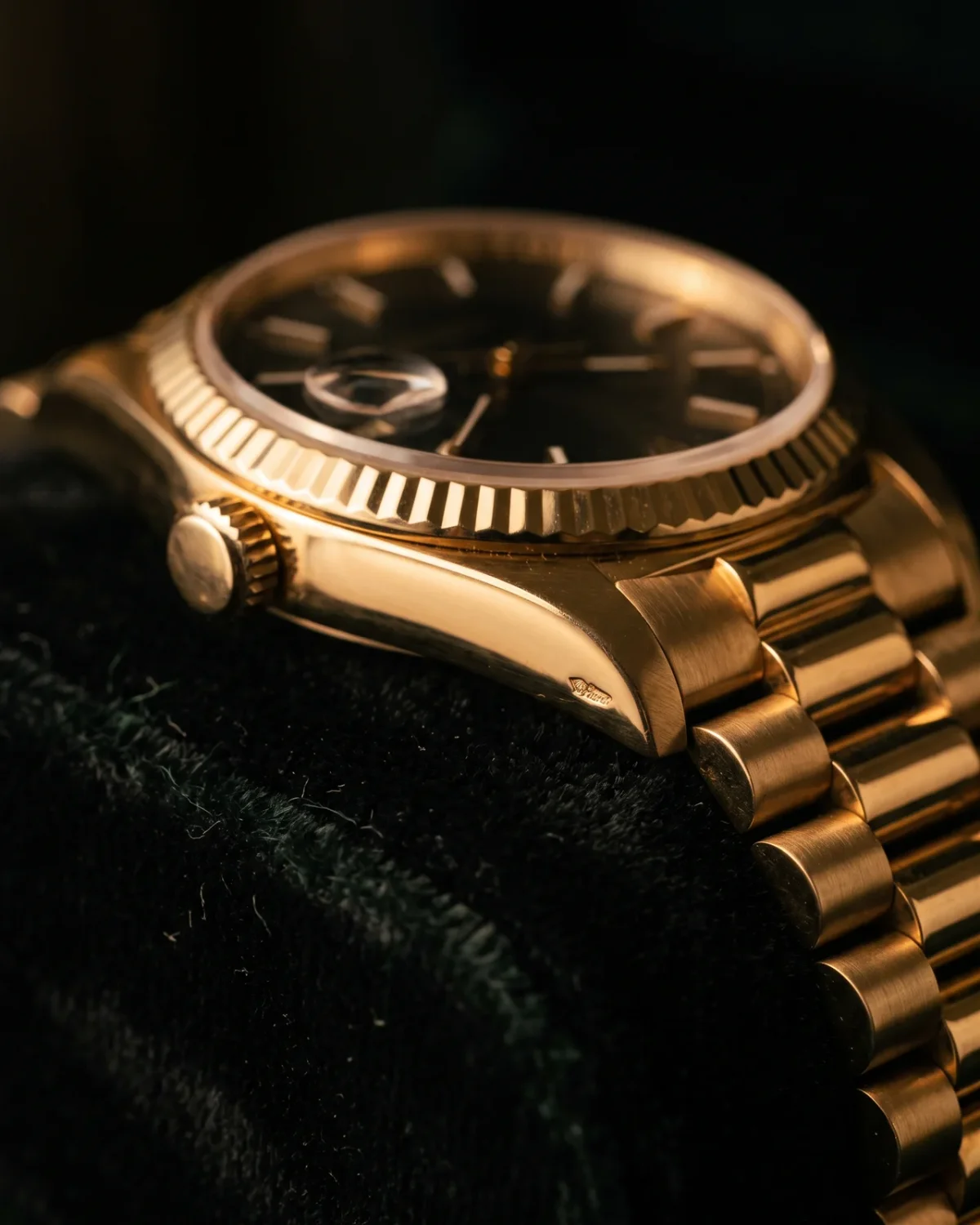
Selling a Day-Date to me
What changes when the dealer prices above the metal.
A metal floor, then the watch
I work out the gold value and the collector value separately and show you both. If the watch is worth more as a watch, that is the number you get. It usually is.
Stone dials and factory diamonds, priced as such
Onyx, lapis, malachite, and meteorite dials, and Rolex-set diamond dials and bezels, are quoted against sales of that configuration. I confirm the stones are factory first.
Aftermarket stones do not stop a sale
A Day-Date with an aftermarket diamond bezel or dial is still a Day-Date. I price the reference underneath and tell you plainly why the stones do not add to the offer.
Paid within 24 hours of inspection
Wire or check, your choice, once the watch is inspected in person and matches the photos.
What I check on a Day-Date
Five things that decide the offer on this model.
Each one moves the number. I explain which way in the reply.
Reference and generation
1803, 18038, 18238, 118238, and 128238 at 36 mm. 218238 Day-Date II at 41 mm. 228238, 228235, 228239, and 228206 at 40 mm. Each has its own market.
Metal, and the dial that belongs to it
Yellow gold, white gold, Everose, and platinum. The ice blue dial belongs to platinum. A dial and metal pairing Rolex never made is the first question I ask.
The President bracelet
Semi-circular links and a hidden Crownclasp. Hollow links on older bracelets stretch and sag. I check the stretch, the end links, and the clasp code.
Who set the stones
Factory diamonds sit in settings cut by Rolex, with a dial code to match. Aftermarket stones are set into the original bezel or a replacement. I can tell on the bench.
Vintage pie-pan dials
A 1803 with its original pie-pan dial, stepped at the edge, is a vintage watch. Refinished dials are common. I quote vintage pieces after inspection.
How it works
Four steps. Real numbers.
01
Get an offer
Send the appraisal form with the dial straight on in daylight, an angled photo if there are stones, the reference between the lugs, the President hanging from the clasp to show stretch, the Crownclasp open, and the card or papers. I reply within 1 business day.
02
Ship or meet
Take the prepaid, fully insured FedEx label, or book an appointment in Miami-Dade, Broward, or Palm Beach. For a vintage or stone-dial piece I prefer to meet.
03
Inspect and confirm
I open the box on camera and check the metal, dial, stones, bracelet, and papers against the photos. If it matches, the offer stands.
04
Get paid
Wire or check within 24 hours of inspection. If we do not agree, the watch goes back to you, insured, at my cost.
36 mm or 40 mm
The two Day-Date lines, and the generations inside them.
Same dial layout, same President bracelet, different cases and different buyers.
| Criteria | Day-Date 36 mm | Day-Date 40 mm and Day-Date II |
|---|---|---|
| References | 1803, 18038, 18238, 118238, 128238 | 228238, 228235, 228239, 228206 from 2015; Day-Date II 218238 at 41 mm, 2008 to 2015 |
| Setting the day and date | No quickset on the 1803, quickset date on the 18038, double quickset from the 18238 | Double quickset throughout |
| President links | Hollow through the 18238; solid from the 118238 onward | Solid throughout |
| What moves the offer most | Dial originality and bracelet stretch | Full set and dial configuration |
Directions, not figures. The metal floor sits under every row; I show the arithmetic in the reply.
The detail
What moves a Day-Date offer, and why.
The metal floor, and why it is only the floor
A Day-Date case and President bracelet carry a real weight of gold or platinum, and a refiner would pay for that weight on the day. That is the floor. A working Day-Date with an original dial almost always sits above it, because the next owner is buying a watch, not bullion. How far above depends on the reference, dial, bracelet, and papers. I show you both numbers.
36 mm, Day-Date II, and Day-Date 40
The 36 mm line is the long one. The 1803 ran through the 1960s and 1970s with an acrylic crystal and no quickset. The 18038 brought a sapphire crystal and a quickset date around the late 1970s. The 18238 added double quickset in the late 1980s. The 118238 arrived around 2000 with solid links and a concealed Crownclasp, and the 128238 replaced it in 2019. Each step changes who wants the watch and what they pay.
The 41 mm Day-Date II (218238 and its siblings) ran from 2008 to 2015 and gave way to the 40 mm Day-Date 40: 228238 yellow, 228235 Everose, 228239 white, 228206 platinum. The 40 trades on full set and configuration. The Day-Date II has a smaller following, so condition and papers matter more there.
The President bracelet and stretch
The President is gold or platinum, so its links wear. On hollow-link bracelets, which is every 36 mm Day-Date before the 118238, the links loosen and the bracelet sags when you hold the watch by the clasp. Some stretch is normal. Heavy stretch, replaced links, or a replacement clasp are priced in, and I say so. Do not have the bracelet tightened or replaced first; an original bracelet with honest wear is worth more than a swapped one.
Stone dials, diamond dials, and who set the stones
Rolex fitted the Day-Date with dials in onyx, lapis lazuli, malachite, meteorite, and other hard stones, and with diamond markers and bezels set in its own workshops. Those configurations trade well above a plain dial of the same reference. I check each for cracks in the stone, lifted markers, and a dial code that agrees with the reference.
Aftermarket diamonds are a different matter. A bezel or dial set by a jeweller after the watch left Rolex does not add to the offer, and usually subtracts, because the next collector will price in putting the watch back to factory. I still buy these watches. I price the Day-Date underneath the stones and tell you which parts are factory. Do not remove the stones before sending.
Day wheels, languages, and vintage pie-pan dials
The day disc was made in many languages for the Day-Date's first markets, so a Spanish, Arabic, or German day wheel is often original. It is a detail, not a flaw, and some buyers seek them out. On the 1803, the original dial has a stepped edge collectors call pie-pan, and a crisp one with its original lume is the heart of the value. Refinished dials are common and lower the offer sharply, so the dial photo is the first thing I look at on any vintage Day-Date.
Metal and the dials that belong to it
Yellow gold is the classic. White gold reads like steel across a room and trades to a different buyer. Everose, Rolex's own rose alloy, appears on Day-Dates from the late 2000s. Platinum is heavier, usually paired with the ice blue dial, and the 228206 is the reference most platinum sellers hold. A dial that does not belong to the metal, such as ice blue in yellow gold, means a swapped dial, and I ask about it first.
When selling to me is not the right call
If the watch is worth only its metal, which happens with a heavily refinished vintage piece on a worn-out bracelet, a refiner may pay about the same and I will say so. If the watch was your father's and you are undecided, keep it; gold does not lose value in a safe. If you have months to chase a private sale on a rare stone dial, a dealer offer sits below that ceiling. If it is a replica or gold-plated, I will not buy it. If you want a clean, insured sale with the money in your account within a day of inspection, that is what I do.
How to prepare your submission
- Dial straight on in daylight, flash off. If there are stones, a second photo at an angle so the settings show.
- The reference between the lugs at twelve o'clock and the serial at six, or the rehaut on a modern piece.
- The President held by the clasp and hanging, so I can judge stretch, then laid flat.
- The Crownclasp open with its code visible, plus the case back and both sides of the case.
- The card or punched papers beside the watch, and any receipts for stones or service. If there are none, say so.
- Which county you are in, and whether you prefer the label or an appointment.
Questions, answered
Before you send a Day-Date
Is a gold Day-Date worth more as a watch or as gold?
Almost always as a watch. The metal sets the floor, and a working Day-Date with an original dial sits above it. I show you both numbers so you can see the gap.
My Day-Date has aftermarket diamonds, do you still buy it?
Yes. I price the Day-Date underneath the stones, as if they were not there, and tell you which parts are factory. Do not remove them before sending.
The President bracelet is stretched, does that matter?
Priced in, not disqualifying. Hollow-link bracelets on older 36 mm references stretch with daily wear. Do not have it tightened or replaced first.
Is the 36 or the 40 worth more?
Neither by default. The 40 trades on full set and configuration. The 36 covers sixty years, so a 128238 and a 1803 sit in different markets. The reference decides, not the size.
Do you buy platinum Day-Dates?
Yes. Platinum carries the highest metal floor, and the ice blue dial is the configuration most buyers want. I quote it on its own market.
What if I have no papers?
I will still appraise it. Papers are rare on a 1803 or 18038 anyway, and the dial and case carry the offer. On a modern 228238 or 128238 the card matters more, and I show you by how much.
Sell your Day-Date
A real number on your Day-Date, in 1 business day.
Submit photos and the papers you have. I respond personally with the metal floor, the watch value, and the reasoning. Insured shipping is on me. Payout within 24 hours of inspection.