
Sell your watch · Collections and estates · South Florida
Several watches, one deal, every piece priced on its own.
This page is for the collector who is downsizing, the heir who has inherited a drawer of watches, and the executor who has to turn a list into a fair number. A collection raises questions a single watch never does. Here is how I handle them.
- Each watch appraised on its own merits, with the reasoning shown per piece
- No lot discount: ten watches are ten offers, not one rounded figure
- One appointment in your county, or one insured shipment for the lot
- I tell you which pieces I will not buy, and why, before anything moves
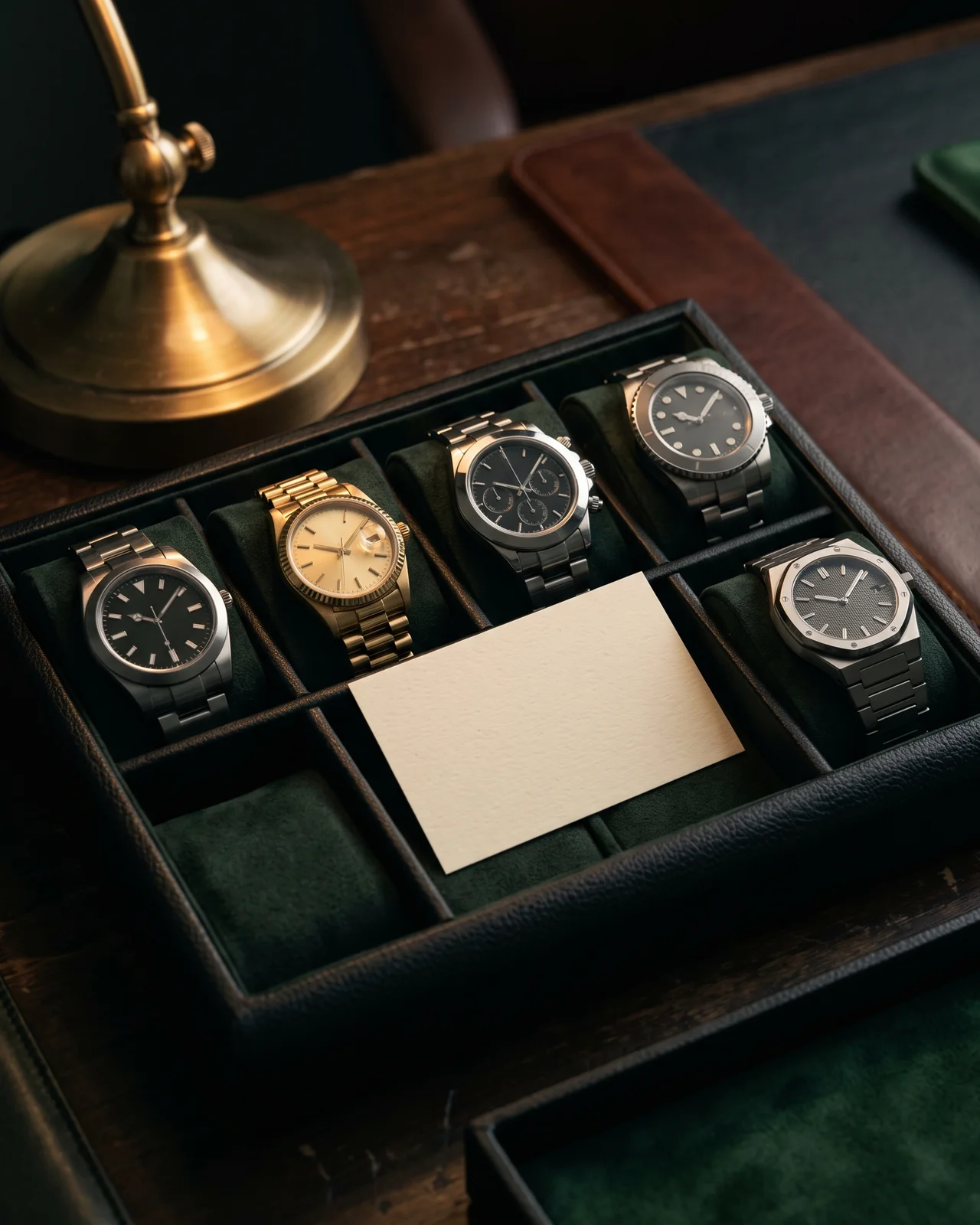
Who this page is for
A drawer, a safe, or a list from a lawyer.
Three kinds of people send me more than one watch. A collector who has decided the collection is too big and wants the good pieces to go somewhere sensible. A son or daughter who inherited a father's watches and does not know a Datejust from a Speedmaster. An executor with a list, a deadline, and a duty to get a fair figure for each item.
They share the same questions. Do I sell everything together or one at a time? Does a dealer pay less per watch when there are many? What do I need to prove I can sell them? Which should go first, and which should I keep? The single-watch pages do not answer any of that, so this one does.
The inherited and estate watch guide covers the heir's side: documents, valuation, and timing. This page is my side: how I appraise a lot, in what order, and what I do with the pieces that are not for me.
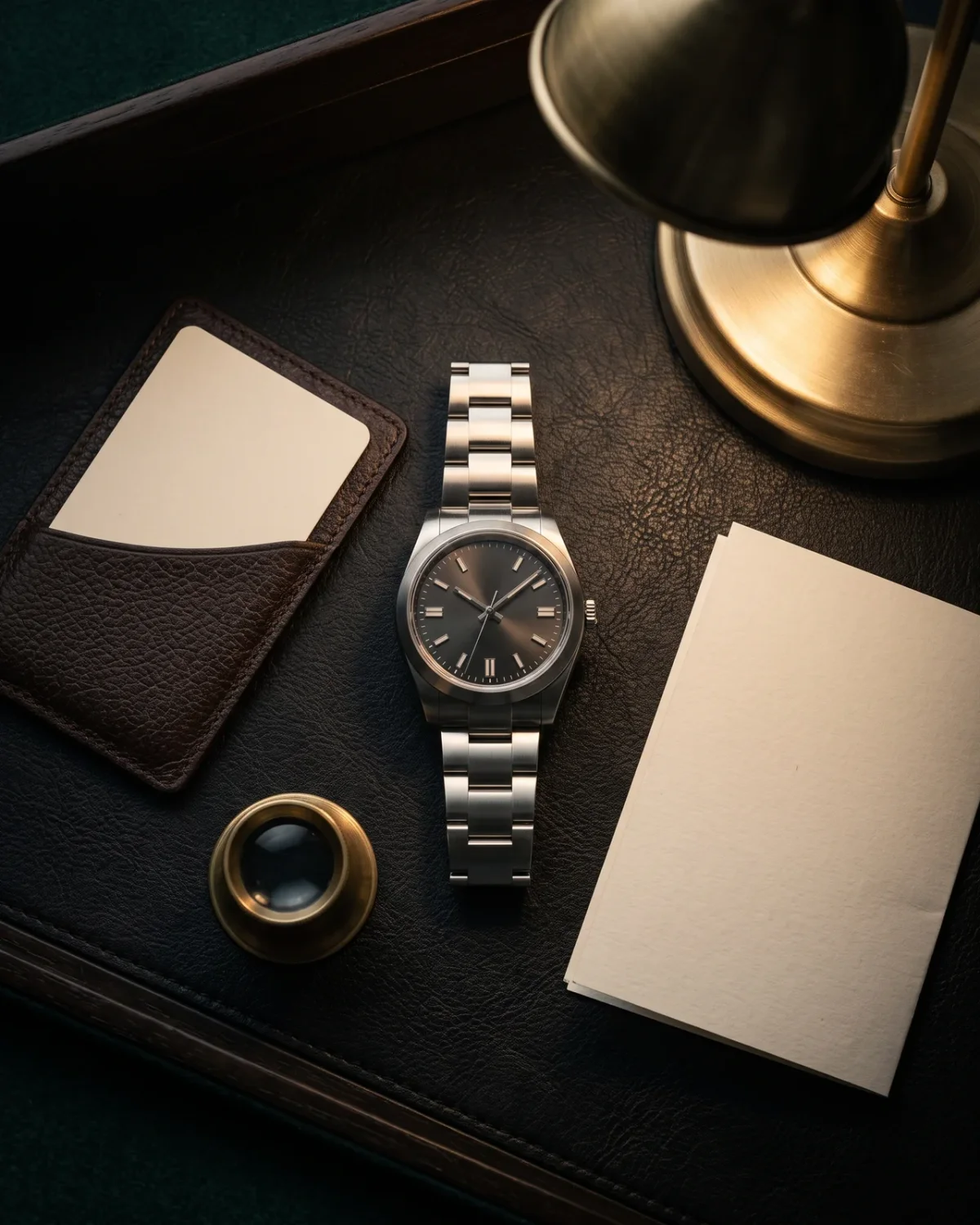
Buying a collection
What changes when there is more than one watch, and what does not.
Each piece on its own merits
A Submariner next to a Tank next to a Speedmaster is three separate appraisals. The weak piece does not drag the strong one down, and the strong one does not carry the weak.
No lot discount
There is no rounding for volume. Each offer is priced against what dealers are paying each other for that reference this week, and I show the arithmetic per watch.
One appointment or one shipment
Once the offers are in, the whole lot moves at once: an appointment in Miami-Dade, Broward, or Palm Beach, or a single prepaid, fully insured FedEx shipment.
A straight answer on every piece
Fashion brands, smartwatches, and pieces with no provenance are named up front. I do not quietly fold them into a lot price.
Nobody hears about the estate
Client identities and transactions are never discussed. An estate sale through me does not become a story anywhere.
What I buy, what I leave
Sorting the drawer before you send the list.
Most collections are a mix. Here is how I sort one.
The brands I buy
Rolex, Patek Philippe, Audemars Piguet, Cartier, Omega, Breitling, Vacheron Constantin, Jaeger-LeCoultre, Tudor, Panerai, IWC, and Zenith. Each of these gets a full appraisal of its own.
Watches without papers
Still bought. The card earns more, but an honest watch stands on its own after inspection. List what paperwork exists per piece and I price the rest.
Vintage and family pieces
Older references are appraised on originality: dial, hands, case, and bracelet. A watch in the family since new is often the strongest piece in the lot.
Fashion brands and smartwatches
Not bought. I tell you which pieces these are so you can sell them elsewhere without waiting on me.
Pieces without provenance
A watch nobody can account for, with no history and a story that does not fit the serial, stays out of the deal. I explain what would change that.
Brands outside my list
If a piece is from a maker I do not deal in, I say so plainly. I do not take a fee for pointing you somewhere else, and I do not invent a number.
The order of operations
List first, offers second, one handover third.
01
Send the list and the photos
One submission on the appraisal form. In the notes, list every piece: brand, model, reference if you can find it, and what papers and boxes exist. Photos of each dial and case back in daylight.
02
One offer per piece, within 1 business day
You get a number and the reasoning for each watch I will buy, and a plain note on each one I will not. A long list may take the full day; it still comes back itemised.
03
Decide what goes and what stays
Sell the whole lot, sell some and keep the family piece, or sell the strong pieces first. The offers stand independently, so you can take any subset.
04
One appointment or one shipment
For a larger lot in South Florida I come to you, in your county, by appointment. From elsewhere, one prepaid, fully insured FedEx shipment for the pieces I am buying.
05
Inspection and payment, itemised
Each watch is inspected in person the same day. The lot is paid by wire within 24 hours of inspection or by certified check, with a per-piece statement for the file.
Lot or piece by piece
Everything at once, or one watch at a time.
Both are real options, because every offer stands on its own. Which wins depends on time and the mix.
| Criteria | The whole lot, at once | Piece by piece, over time |
|---|---|---|
| How it is priced | Each watch on its own merits; the total is the sum of the offers | The same per-watch offer, but the market may move between sales |
| Time to close | One reply, one handover, one payment | Weeks or months, one deal at a time |
| Handling and risk | One appointment or one insured shipment | Repeated shipments or meetings, each a separate exposure |
| The pieces I do not buy | Named up front and left out; you sell them elsewhere in parallel | The same answer, just later |
| When it wins | An estate with a deadline, a downsizing collector, anyone who wants it done | A collector testing the market on one strong piece before deciding on the rest |
| When it does not | You are undecided about a family piece: keep it out of the lot | You have an executor's duty and a closing date; delay costs more than it earns |
Auction is the third option for a large or unusual collection. The dealer-versus-auction comparison covers the fees, the timing, and when the saleroom wins.
The detail
Collections and estates, question by question.
There is no lot discount, and no lot premium either
A collection is not a product. Each reference in it has its own market, its own buyers, and its own comparable sales this week. Bundling only hides the weak pieces inside the strong ones, which is good for the buyer and bad for you. So I price each watch as if it arrived alone and show the arithmetic per piece. For an executor that matters twice: the beneficiaries can see why a Nautilus and a quartz Tank came back with different numbers, and the file shows a reason for each.
Which pieces to sell first
If you are not selling everything at once, start with the pieces that have the widest market: steel sport Rolex, a Nautilus or Aquanaut, a Royal Oak, a Speedmaster with its cards. They are the easiest to price and the fastest to close, and they tell you quickly whether my numbers are right. Dress pieces, quartz pieces, and uncommon references take more conversation. The family piece goes last, or never. If you are undecided, leave it off the list; it costs nothing to add later.
What an executor needs
Less than most people expect. I need the watches, the papers if they exist, and whatever document gives you the authority to sell them. I do not need the original receipts, a prior appraisal, or service records, though any of those helps the number. Everything I pay is itemised per watch for the estate file. If a beneficiary wants to keep a piece, take it off the list before I inspect, not after.
When to get an independent appraisal first
My offer is a purchase price, not a valuation document. If the estate or the court needs a written valuation, that comes from an independent appraiser, before the sale, not after. Get it, then send me the list. The two numbers will not match: one is what a watch is said to be worth, the other is what I will pay for it this week. I explain the gap piece by piece if you want it explained.
Inspecting many pieces at once
For a larger lot in South Florida I come to you, in your county, by appointment, Monday to Saturday. The inspection takes as long as it takes: every watch gets the same pass over case, movement, papers, and serials, and nothing changes hands until the last one is done. From elsewhere the lot travels as one insured shipment on my label, each watch in its own box, inspected the same day it arrives. The secure shipping page has the packing rules.
The pieces I leave, and what to do with them
- Fashion brands and smartwatches: sell them locally or online. Do not ship them to me; they come straight back.
- Brands outside my list: I say so plainly. There is no referral fee and no pretend number.
- Pieces without provenance: service records, an original receipt, or a serial that matches the papers would change the answer. Without them, the piece stays out.
Privacy, for a family that would rather not explain
Client identities, holdings, and transactions are never discussed, published, or shared. The shipment is unbranded. An estate that sells through me does not appear on a list, in a story, or in a conversation with the next client. That cuts both ways: I will not tell you who else sold me a collection.
When selling the collection to me is not the right call
If one piece is rare and has a story, a saleroom's reach may earn more than a dealer offer after the fees and the wait; the dealer-versus-auction comparison is honest about when. If you have time and want private-sale prices, selling piece by piece to collectors can land higher. If most of the collection is outside my brands, you need a different buyer. And if you are not yet the person with authority to sell, wait until you are.
Questions, answered
Before you send the list
Do you pay less per watch when I sell several at once?
No. Each watch is priced on its own merits against real dealer-to-dealer transactions for that reference, and the total is the sum of the offers. There is no lot discount and no lot premium.
What does an executor need to sell a watch collection?
The watches, the papers if they exist, and the document that gives you authority to sell. Everything I pay is itemised per piece for the estate file.
Do you buy watches without box and papers?
Yes. A full set earns more, but a correct, honest watch stands on its own after an in-person inspection. List what paperwork exists for each piece and I price the rest.
Can you come to me for a larger collection?
Yes. For a larger lot in Miami-Dade, Broward, or Palm Beach I meet you in your county, by appointment, and inspect every piece there. From elsewhere, the lot ships as one insured shipment on my label.
Will anyone know the estate was sold?
No. Client identities, holdings, and transactions are never discussed, published, or shared, and the packaging is unbranded.
Sell a collection
Send the list. One offer per piece, within 1 business day.
Use the appraisal form once. List every watch in the notes, link the photos, and say whether you would rather meet in your county or ship the lot on my label.