
Sell your Explorer · South Florida · by appointment
Sell your Rolex Explorer, whichever Explorer it is.
Explorer and Explorer II are two different watches under one name. Send photos and the reference. I tell you which you own and what the dial and hands do to the offer, within 1 business day.
- Explorer and Explorer II priced on their own comparables
- Polar dials, short hands, and lume eras read by me, in person
- Prepaid insured FedEx label, or an appointment in your county
- Wire or check within 24 hours of inspection
Who this page is for
Two watches, one name, and a dial that decides a lot.
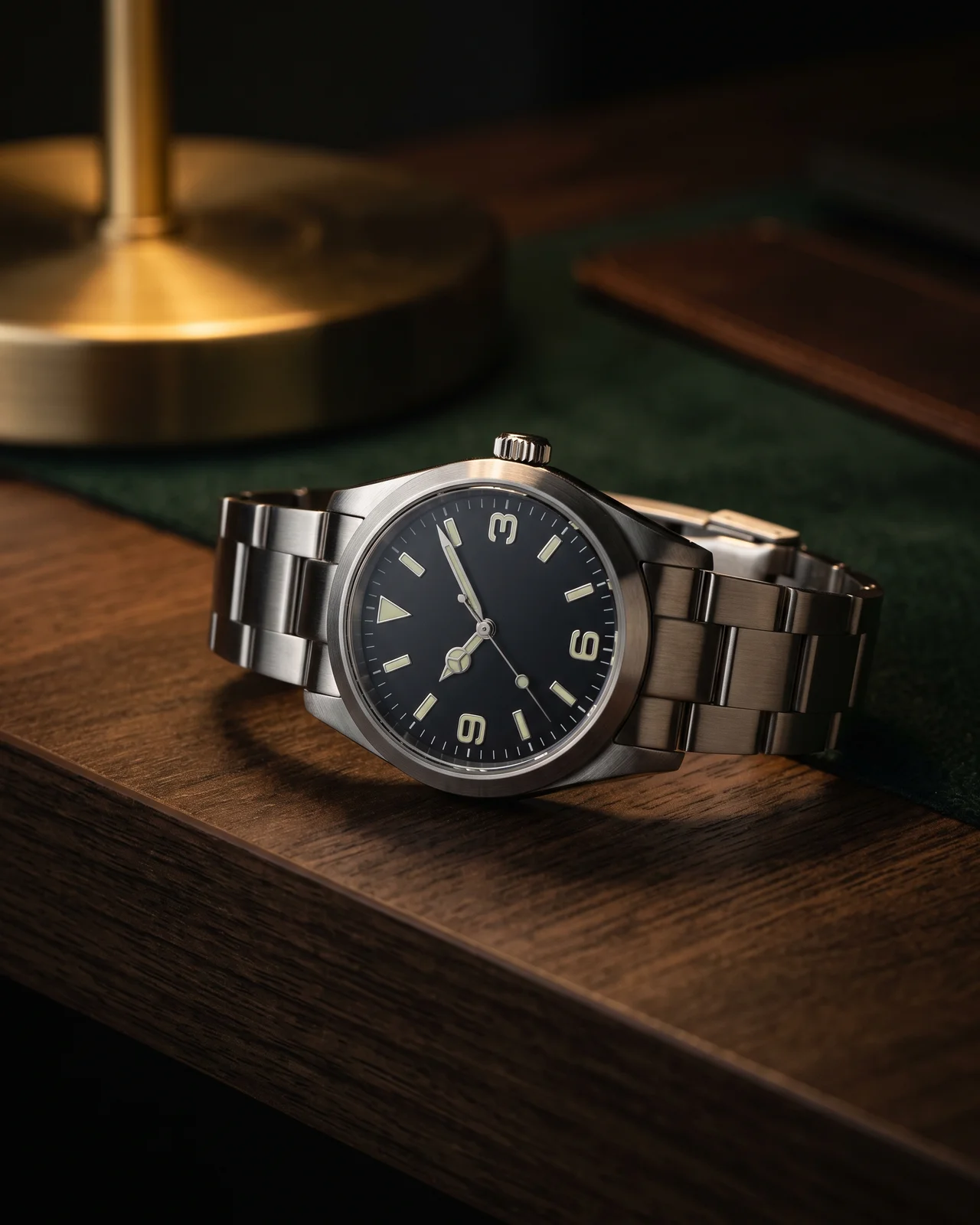
This page is for anyone selling a Rolex Explorer who wants to know, before the offer, which Explorer it is. Three numerals on a black dial and nothing else: an Explorer. A 24-hour hand, a date, and a fixed engraved bezel: an Explorer II. They are appraised on separate comparables, and each has generations that trade apart.
The Explorer moved from 36 mm to 39 mm and back, then added a 40 mm. The Explorer II moved from 40 mm to 42 mm. Inside those sizes, the hands, the lume, and the dial colour are what collectors pay for, and what I ask you to photograph.
Serial eras, card versus punched papers, polishing, and Rolex service in general are explained on the Rolex page. Here I keep to the Explorer: the references, white dial condition, the 214270 hand question, and what to send.
What I check on an Explorer
The points that separate one Explorer from the next.
Explorer or Explorer II, settled first
A 24-hour hand and an engraved bezel make it an Explorer II. Three numerals and nothing else make it an Explorer. I confirm it from your photos before I quote.
White dials under a loupe
Polar 16570 and 216570 dials can spot, yellow, or craze. I check the surface in person and price what I see, not what a listing says.
Hands and lume by generation
Short hands on an early 214270, lumed numerals on a later one, tritium against Luminova on a 14270 or 16570. These separate otherwise identical watches.
Inspected by hand
I check the case, movement, serial, and papers myself. Nothing goes to a grading team.
What moves the offer
Five Explorer details that change the number.
Each one moves the offer up or down. I say which way in the reply.
Case size and reference
36 mm on the 14270, 114270, and 124270; 39 mm on the 214270; 40 mm on the 224270. Explorer II: 40 mm on the 16570, 42 mm on the 216570 and 226570.
Polar or black
On the Explorer II the white dial and the black dial are counted separately. A clean polar dial draws a different buyer than a black one.
Lume era and dial printing
T Swiss T tritium, the short Swiss-only transition, Swiss Made Luminova, then Chromalight. The print at six o'clock should match the serial era; a service dial is priced as one.
Blackout and rail dials
An early 14270 with black-filled numerals, or a 16550 with a cream dial, is a specialist watch. Tell me, and send a daylight photo straight on.
Your risk is covered
The label is prepaid on my FedEx account, insured to the declared value, signature required, opened on camera.
How it works
Four steps. Real numbers.
01
Get an offer
Submit the form with photos: dial straight on in daylight so a white dial reads true, a close-up of the numerals and hands, the 24-hour hand and bezel on an Explorer II, the case back, the clasp open with the code, the rehaut, and the card beside the watch. I reply within 1 business day.
02
Ship or meet
Take the prepaid, insured FedEx label, or book an appointment in Miami-Dade, Broward, or Palm Beach. A 1016 or a 1655 I would rather see in person.
03
Inspect and confirm
I open the box on camera and check the dial surface, hands, lume, bezel, clasp, serial, and movement. If it matches the photos, the offer stands.
04
Get paid
Wire or check within 24 hours of inspection. If we do not agree, the watch goes back to you, insured, at my cost.
Explorer or Explorer II
Two watches that share a name and not much else.
Not sure which you own? The bezel settles it: smooth is an Explorer, engraved is an Explorer II.
| Criteria | Explorer | Explorer II |
|---|---|---|
| Dial | Black, 3-6-9 numerals, no date | Black or white (polar), date at three, orange or red 24-hour hand |
| Bezel | Smooth, polished steel | Fixed, engraved 24-hour scale in steel |
| Sizes and references | 36 mm: 1016, 14270, 114270, 124270. 39 mm: 214270. 40 mm: 224270 | 40 mm: 1655, 16550, 16570. 42 mm: 216570, 226570 |
| Variants that trade apart | Blackout 14270, short-hand 214270, two-tone 124273 | 1655 orange hand, 16550 cream rail dial, polar versus black 16570 |
| What I look at first | Hand length and numeral lume on a 214270; dial print on a 14270 | Dial surface on a polar; colour and originality of the 24-hour hand |
| Vintage, in person | 1016 | 1655 and 16550 |
Directions, not figures. The effect depends on the reference and the week, and I show the arithmetic in the reply.
The detail
What moves an Explorer offer, and why.
The Explorer references, in order
The 1016 is the vintage Explorer: 36 mm, matte dial, made from the early 1960s into the late 1980s. The 14270 replaced it around 1989 with a sapphire crystal, a gloss dial, and applied numerals, and ran to about 2001; early examples with black-filled numerals are the blackout dials. The 114270 followed from around 2001 to 2010 with the calibre 3130 and solid end links.
The 214270 took the Explorer to 39 mm from 2010 to 2021. The 124270 brought it back to 36 mm in 2021 with the calibre 3230, alongside the two-tone 124273. The 224270 added a 40 mm case in 2023. Each size has its own buyer, and I price each against its own reference.
The Explorer II references
The 1655, with its orange 24-hour hand, is the vintage Explorer II from the 1970s into the mid 1980s. The 16550 followed briefly with a white dial whose lacquer aged to cream; the best of these are called rail dials, after the way two lines of text align. The 16570 ran from about 1989 to 2011 at 40 mm in polar white or black. The 216570 moved to 42 mm in 2011 and brought the orange hand back. The 226570 updated the movement and case in 2021.
The 214270 hand question
The first 214270 dials, from 2010 to around 2016, have hands collectors call short, and the 3-6-9 numerals carry no lume. The update around 2016 lengthened the hands and filled the numerals with Chromalight. Some collectors want the first dial because it is the one that was corrected; most wearers want the later one. Both are priced on their own comparables, so send a straight-on photo and I will tell you which you have.
Selling a 39 mm now that 36 and 40 replaced it
The 214270 is the only 39 mm Explorer, and it has its own following since it was discontinued. I do not forecast where it goes. What its buyer wants is an unpolished case with the brushing intact, the bracelet with every link, and the card. A full set matters more on a discontinued reference than on one still in the catalogue.
Polar dials: spotting, yellowing, and cream
A white dial shows everything. On a 16570 and a 216570 I look for spots, a yellow cast at the edges, and fine cracks in the lacquer, under a loupe and in daylight. Those lower the offer. On a 16550 the cream tone is the opposite case: an even, warm patina is the reason the watch is wanted. Photograph the dial straight on without a flash, and see the grading guide linked below for how I describe dial condition.
Lume eras and dial printing
A 14270 or 16570 from the tritium years reads T Swiss T or Swiss T 25 at six o'clock. A short run in the late 1990s reads only Swiss. After that, Swiss Made with Luminova, then Super-LumiNova. The 214270 and later use Chromalight, which glows blue. The print should agree with the serial era; a dial that reads newer than the serial is usually a service dial and is priced as one.
Bracelets, end links, and the clasp
Earlier 14270 and 16570 bracelets have hollow end links; later ones and the 114270 have solid end links, which collectors prefer. The 214270 onward carries the modern Oyster bracelet with the Easylink extension. The clasp code should agree with the age of the watch, as the Rolex page explains. I look for stretch, replaced end links, and a clasp that belongs to the reference.
Vintage 1016 and 1655: in person, and untouched
If you have a 1016 or a 1655, do not clean it, polish it, or send it for service before we talk. The value is in the original dial, hands, and case, and a service can replace all three. I prefer to meet in your county and look at these under a loupe.
When selling to me is not the right call
If you own a 1655 or a rail-dial 16550 and have months to spare, an auction house may serve you better, and I will say so after I see it. If you want me to tell you the 214270 will keep climbing, I cannot; I buy at what the market pays this week. If the watch is a replica, I will tell you and will not buy it. If you want a clean, insured, documented sale from one person who can explain the number, that is what I do.
How to prepare your submission
- Dial straight on in daylight, no flash, so a white dial and the numerals read true.
- A close-up of the hands and numerals, for hand length and lume.
- On an Explorer II, the 24-hour hand and the bezel engraving.
- The case back and the rehaut, with the serial between the lugs if you can read it.
- The clasp open: code and underside, and the end links where they meet the case.
- The warranty card or papers beside the watch, or say they are missing.
- Service history, including a replaced dial or hands, or say you do not know.
- Ship on my label or meet in person, and which county you are in.
Questions, answered
Before you send an Explorer
Is my Explorer a I or a II?
Look at the bezel. Smooth and polished with a black 3-6-9 dial and no date is an Explorer. Engraved with a 24-hour scale, with a date and an extra orange or red hand, is an Explorer II.
Is the polar dial worth more?
It is priced separately, not automatically higher. A clean polar dial draws strong interest; a spotted or yellowed one is priced down for the dial.
My 214270 has short hands. Is that the better one?
It is the first version, from 2010 to around 2016, with unlumed numerals. Some collectors prefer it; most wearers prefer the later long-hand dial. I price each against its own comparables.
Do you buy the vintage 1016 and 1655?
Yes, and I would rather see them in person. Do not clean, polish, or service them first. The original dial, hands, and case carry the value.
What if there is no card?
I still appraise the watch. The offer leans harder on the serial and the inspection, and I tell you how much the missing card affects this reference. It matters more on a discontinued 214270.
Sell your Explorer
A real number on your Explorer, in 1 business day.
Send the dial, the hands, the clasp, and the card. I identify the reference, explain the offer, and pay within 24 hours of inspection. Shipping is on me.