
Guide · Polishing and resale value
Do not polish or service a watch before you sell it. Here is why, and what to do instead.
Most sellers spend money making the watch look new, and most dealers price the result below the honest version. What a polish removes, why I can see it on the bench, when a service helps, and the cleaning that is always fine.
- A polish removes metal: lug bevels, the Oyster chamfer, hallmarks
- An unpolished case with honest marks earns more than a buffed one
- I service the watch anyway; a fresh receipt helps less than you think
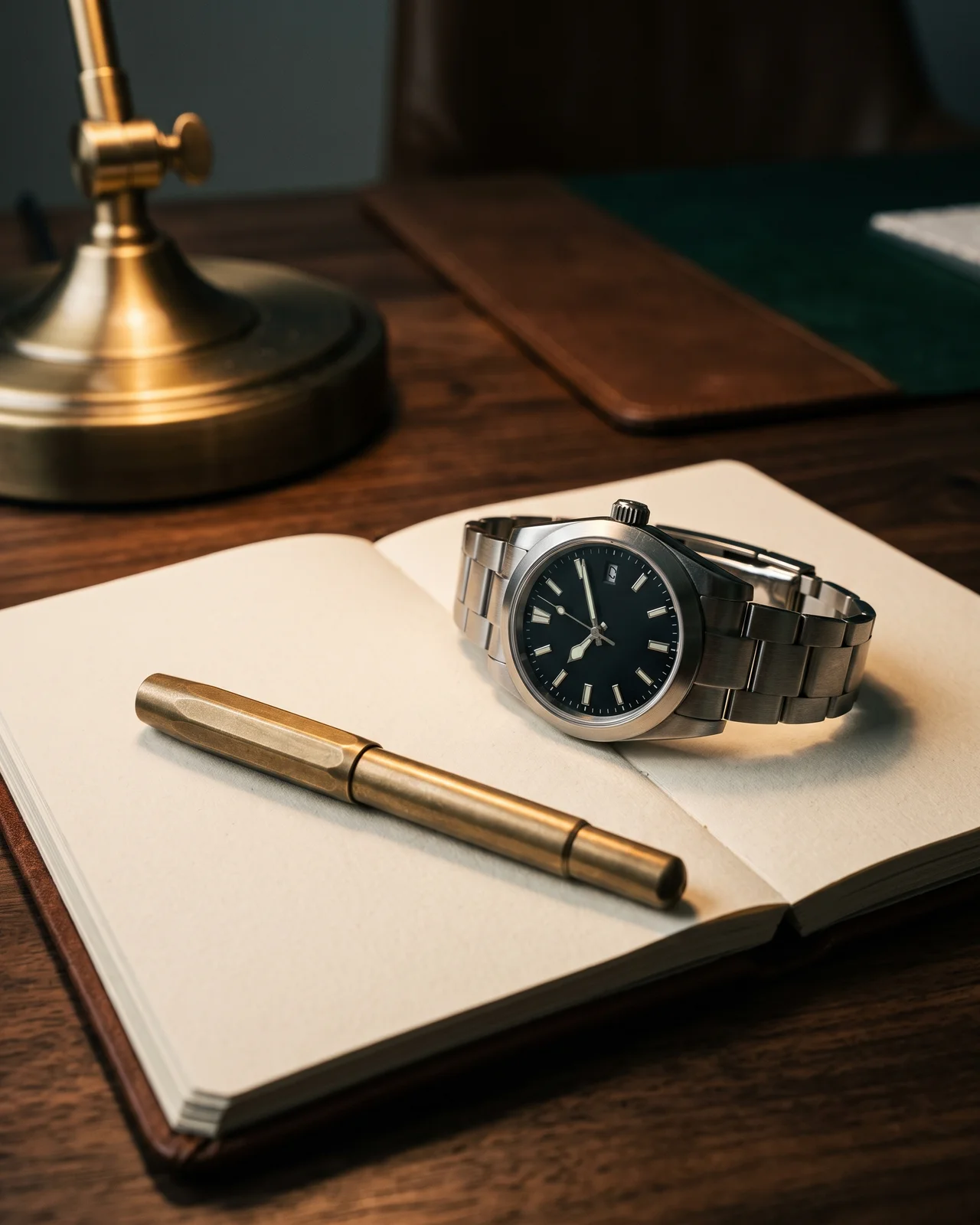
Who this guide is for
Marks are wear. A polish is work.
This guide is for the seller who is about to book a polish, a service, or both, because the watch should look its best before it goes out. Stop for ten minutes and read this first. The money you are about to spend usually comes straight off the offer, and sometimes more than that.
A scratch is evidence that the watch was worn. A polish is evidence that someone removed metal to hide that. Collectors and dealers pay for the first and discount the second, because the edges that left the factory can never be put back.
The brand pages each say this in one clause. This is the full version: what polishing takes away, how I see it, when a service is worth it, what cleaning is safe, and what to tell me about work done years ago.
Instead of the polish
What to do before you sell, in five steps.
01
Cancel the polish
Do not book it, and do not let a jeweller tidy up the bracelet. A light buff on a bracelet is still a buff, and the clasp edges show it.
02
Clean it with a soft cloth
A microfibre cloth, a little warm water on a steel bracelet, a soft brush between the links with the crown screwed down. Nothing abrasive, no polishing cloth, no toothpaste, no ultrasonic bath at home.
03
Photograph the marks honestly
Window light, no filters. Shoot the scratch on the clasp and the ding on the lug. I price wear as wear and a surprise as a surprise.
04
Write down past work
A polish or service years ago is not a fault. Note who did it, when, and what came back in the bag. If you do not know, say so.
05
Submit and let the bench decide
Send the photos and the notes. I reply within 1 business day, inspect in person, and show the reasoning, including how any past polish moved the number.
The detail
Polishing, servicing, and the offer.
What a polish actually removes
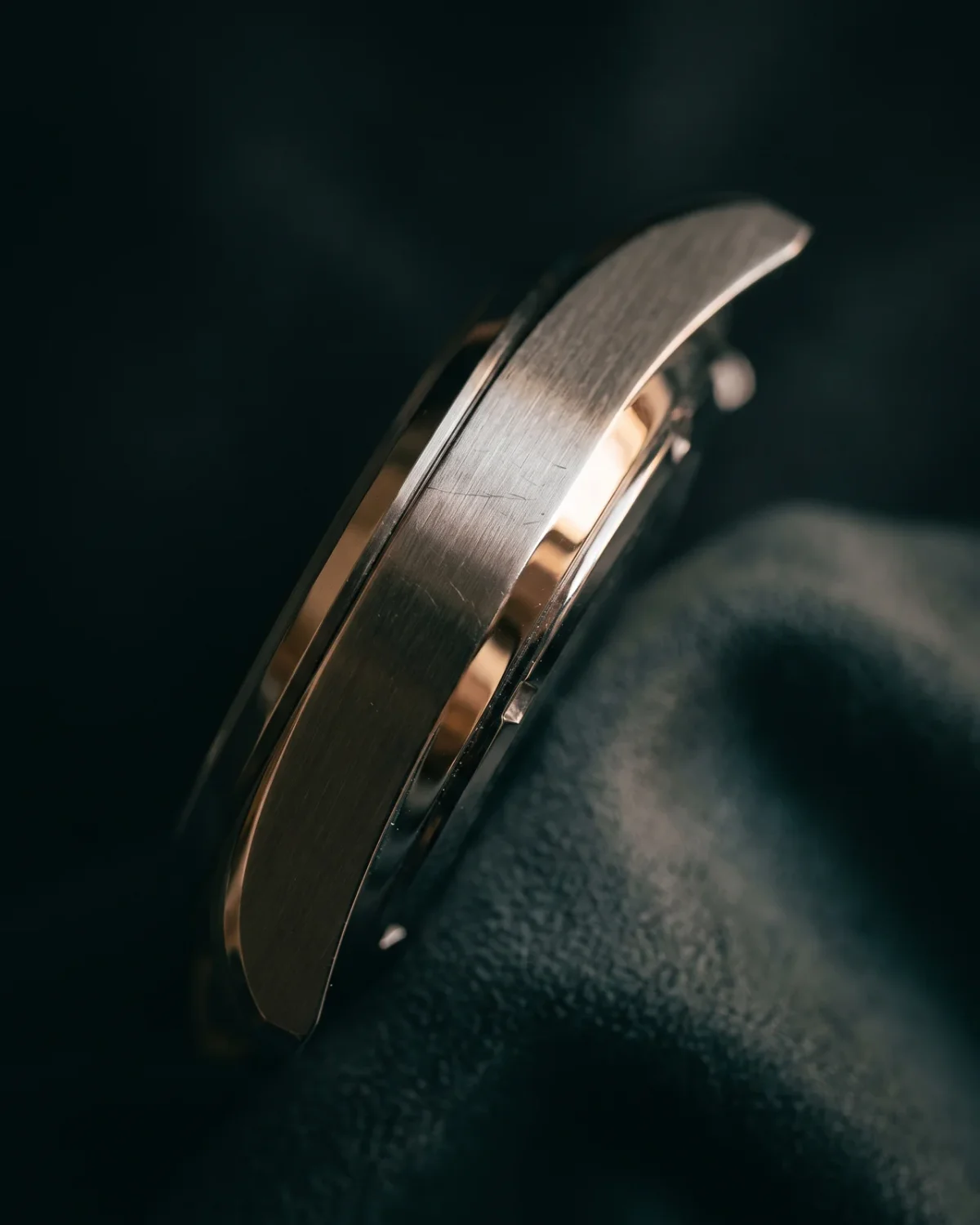
Metal. A polishing wheel takes off the surface to get below the scratches, and the surface is where the shape lives. The chamfer along a Rolex Oyster case lug, the line where brushed meets polished on a Royal Oak, the crisp edge of a drilled lug hole, the thickness of the lugs, the profile of a crown guard, the sharp coin edge of a bezel. Each pass takes a little. Three services take a lot.
How a dealer sees a polished case
Under a loupe and raking light it is not subtle. Lug tips round off. The bevel fades toward the tip instead of running clean to the end. Brushing runs the wrong way or ends in a polished smear at the edge. Lug holes go oval. Case sides go slightly concave where the wheel dwelt. The finish on the case no longer matches the finish on the clasp. When I am unsure I compare lug thickness against an unpolished example of the same reference. I do not need to guess.
Why honest marks earn more than a buffed case
Unpolished examples of a reference trade above polished ones in the dealer-to-dealer data I price against, and the gap widens on vintage sport references where case shape is most of the value. The logic is simple. A scratch is cosmetic: the next owner can live with it or polish once, on their own terms. A polish is permanent: the next owner cannot undo it. So the market prices wear lightly and polishing as what it is.
Servicing before sale: the receipt helps less than you think
I service the watch I sell through my own watchmaker after inspection, so a service you pay for a month before selling mostly pays for work I would have done. A fresh service by an unknown shop is a question, not an answer: why now, and what was replaced? A brand service from years ago, with the receipt and the bag of old parts, does help, because it turns unknown history into known history. A fresh service also tends to come with replaced parts (dial, hands, insert, crystal) that raise reliability and lower collector interest. If the watch has stopped, do not service it. Send it as it is and the offer accounts for the work.
Aftermarket parts, straps, and upgrades
An aftermarket bezel insert, a sapphire crystal fitted to a reference that left with acrylic, stones set into a steel bezel, a replacement dial: each is priced as a modification, and stones set later are the most expensive kind. If you have the original parts, put them back or send them in the box. A watch on a rubber strap with its bracelet in the drawer is fine, as long as the bracelet comes along.
Brand notes
- Rolex: the Oyster case chamfer is the first casualty and the first thing a collector checks. A Cerachrom bezel never needs polishing; the engraved steel bezel on a 116520 shows every touch of a wheel.
- Audemars Piguet: the alternating brushed and polished bevels on the Royal Oak bezel, case, and bracelet are the watch. Only AP's own refinishing keeps the geometry, and collectors still prefer untouched.
- Patek Philippe: the hallmarks on the case band and lugs soften with every polish. A soft hallmark on a Calatrava or a Nautilus reads as polished at a glance.
- Cartier: gold is soft. The brancards of a Tank and the bezel screws of a Santos lose their edges fast, and the screw slots should be clean, not rounded.
Cleaning that is always fine
A soft cloth. Warm water and a soft brush on a steel or gold bracelet with the crown screwed down, then dry. Wipe a leather strap, nothing more. Do not use a jewellery polishing cloth; it is abrasive. Do not open the case back. Keep the box free of dust and the papers flat.
What to tell me
A past polish is not a fault. Hiding it is, because I find it on the bench, and then the rest of the submission is read differently. Tell me who serviced the watch and when, which parts came back in the bag, and whether the bracelet was ever refinished. Honest wear and honest history get an offer that reflects the watch, with the reasoning shown.
When polishing or a service is the right call
When you are keeping the watch and want it fresh: fine, once, at the brand. When a modern daily wearer goes back for a full service and a light refinish is standard: acceptable, but decline the refinish if you may sell within a few years. When the crystal is cracked or the crown will not screw down: that is a repair, not a polish, and I price the watch both ways, repaired or as found. Not before a sale to a dealer or a collector.
The decision
Sell it as it is, or polish and service first?
| Criteria | Sell as it is | Polish and service first |
|---|---|---|
| What I see on the bench | Honest wear: scratches, a ding, a faded insert | Rounded lugs, a soft bevel, a new insert, a service dial |
| Effect on the offer | Wear priced as wear, the smaller discount | Metal removal and replaced parts priced as permanent, the larger one |
| Cost to you | Nothing | The service, the polish, and weeks without the watch |
| Time to sale | Reply in 1 business day, inspection the day it arrives | Weeks at the service centre first |
| The next owner | Can polish once if they want, or leave it | Cannot put the edges back |
| When it wins | Every sale to a dealer or a collector | A watch you are keeping, or a cracked crystal or crown that needs repair |
A watch that has stopped is not a reason to service first. Send it as it is and the offer accounts for the work.
Questions, answered
Polishing and servicing, in short
Should I polish the watch before selling?
No. A polish removes metal from the edges collectors pay for, and the offer drops more than the polish cost. Clean it with a soft cloth and send it as it is.
Should I have the watch serviced before selling?
No. I service the watch I sell after inspection, so a fresh service mostly pays for work I would do anyway, and it often comes with replaced parts that lower collector interest. A stopped watch is fine to send as it is.
Will you know if the watch was polished years ago?
Yes. Rounded lug tips, a fading bevel, oval lug holes, and brushing that ends in a smear show under a loupe, and lug thickness can be measured against an unpolished example. Tell me first and it is priced as a polished case, nothing more.
Is it OK to clean the watch before I send it?
Yes. A microfibre cloth, warm water and a soft brush on the bracelet with the crown screwed down, then dry. No polishing cloth, no abrasives, no ultrasonic bath, and do not open the case back.
Part by part
What a polish takes away.
Lug bevels and the Oyster chamfer
The angled edge along a Rolex lug is the first thing a wheel softens and the first thing a collector checks.
Brushed and polished boundaries
The crisp line between finishes on a Royal Oak, a Nautilus, or an Oyster case blurs into a smear after one pass.
Hallmarks and engravings
Patek and Cartier hallmarks on the case band and lugs, and the reference between the lugs, go shallow and soft.
Lug holes and case thickness
Drilled lug holes go oval. Lugs get thin. Both are measurable against an unpolished example of the same reference.
Bezel edges and crown guards
The coin edge of a bezel, the crown guard on a Submariner, the slotted screws on a Santos: edges round and slots widen.
The original surface
The factory finish and the way wear sits on it. Gone after a buff, and that absence is what reads as polished.
Why it pays
What selling it unpolished gives you.
Collectors pay for edges
Unpolished examples of the same reference trade above polished ones. The sharp case is the premium.
Wear is the smaller discount
A scratch is cosmetic. A polish is permanent. I price the first lightly and the second as what it is.
You keep what you would have spent
The polish and the service come off the offer anyway. Skip both and keep the sum.
A disclosed polish is not a fault
Tell me it was polished at a service ten years ago and it is priced as a polished case. Hide it and the whole submission is read with suspicion.
Inspected by hand, same day
Case, movement, papers, and serials on the bench the day the watch arrives, with the reasoning shown.
As it is
Put the cloth down. Send the photos.
Photos in window light, a note on any past service or polish, and I reply personally within 1 business day with an offer and the reasoning.