
Guide
How to Spot a Fake Watch
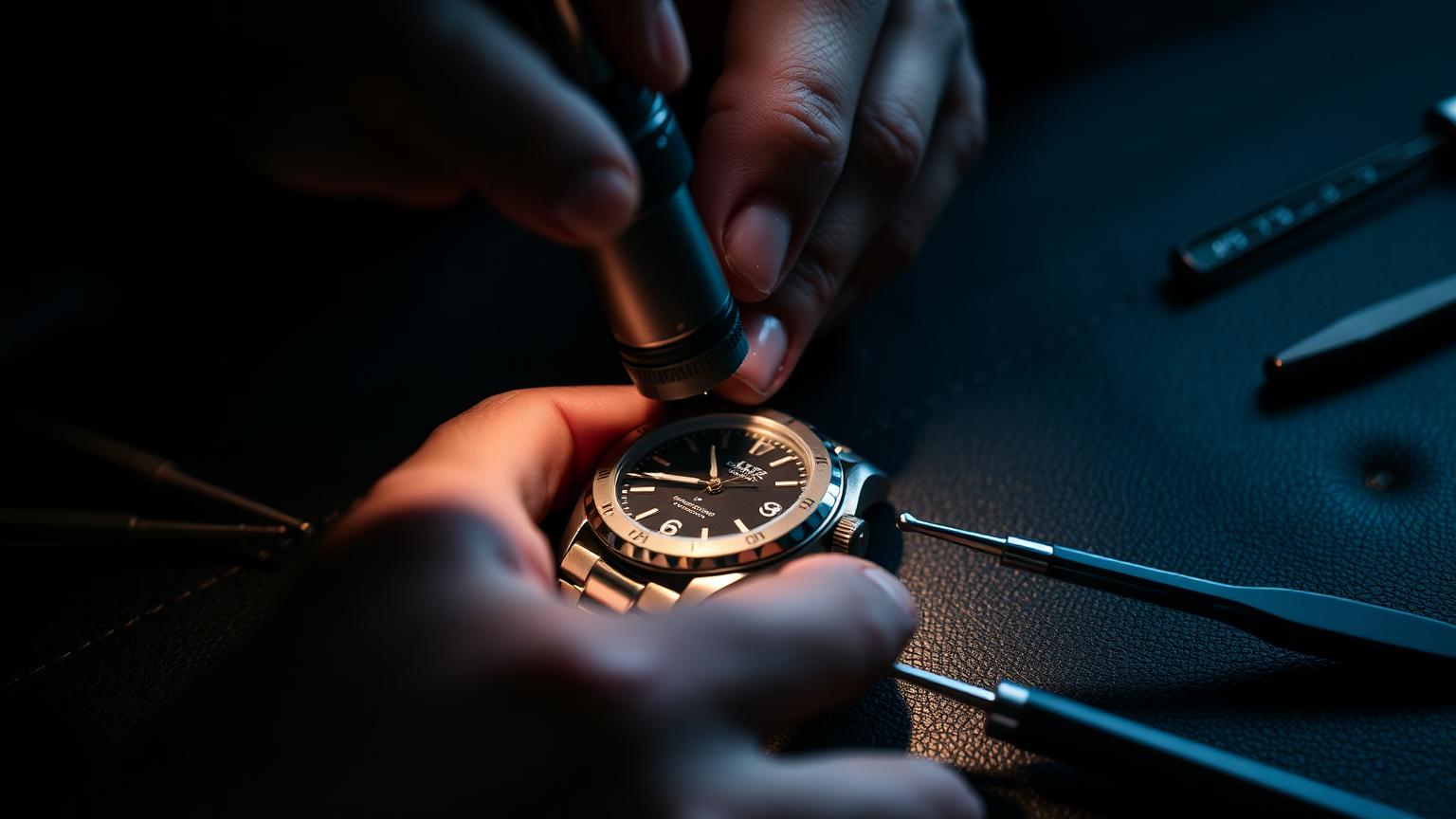
I'll be honest with you: the old advice doesn't work anymore. Feel the weight, listen for the sweep, check for a ticking second hand, that guidance was written for a world that no longer exists. Today's top-tier counterfeits, the ones the community calls superclones, come out of factories using genuine 904L steel, ceramic bezels with proper deep engraving, functional screw-down crowns, and cloned movements. The gap between a five-figure Swiss watch and a $600 clone has narrowed to a hairline. Here's how a dealer actually authenticates in 2026, in order, because the order is the whole point.
Step 1: Price the watch before you touch it
The single most effective fake-detector isn't a loupe, it's the market. Before you inspect anything, compare the asking price to the real secondary market (Chrono24, WatchCharts, a reputable dealer's sold listings). If a Submariner 126610LN is being offered at $8,000 when the market sits at $13,000 to $16,000, you already have your answer: it's either counterfeit or stolen. The market does not give gifts. And if the seller layers on a story, urgent divorce, sudden move, need it gone today, treat the listing as dead. This one step eliminates the majority of fraudulent offers before you ever meet the seller.
Step 2: The serial and its location
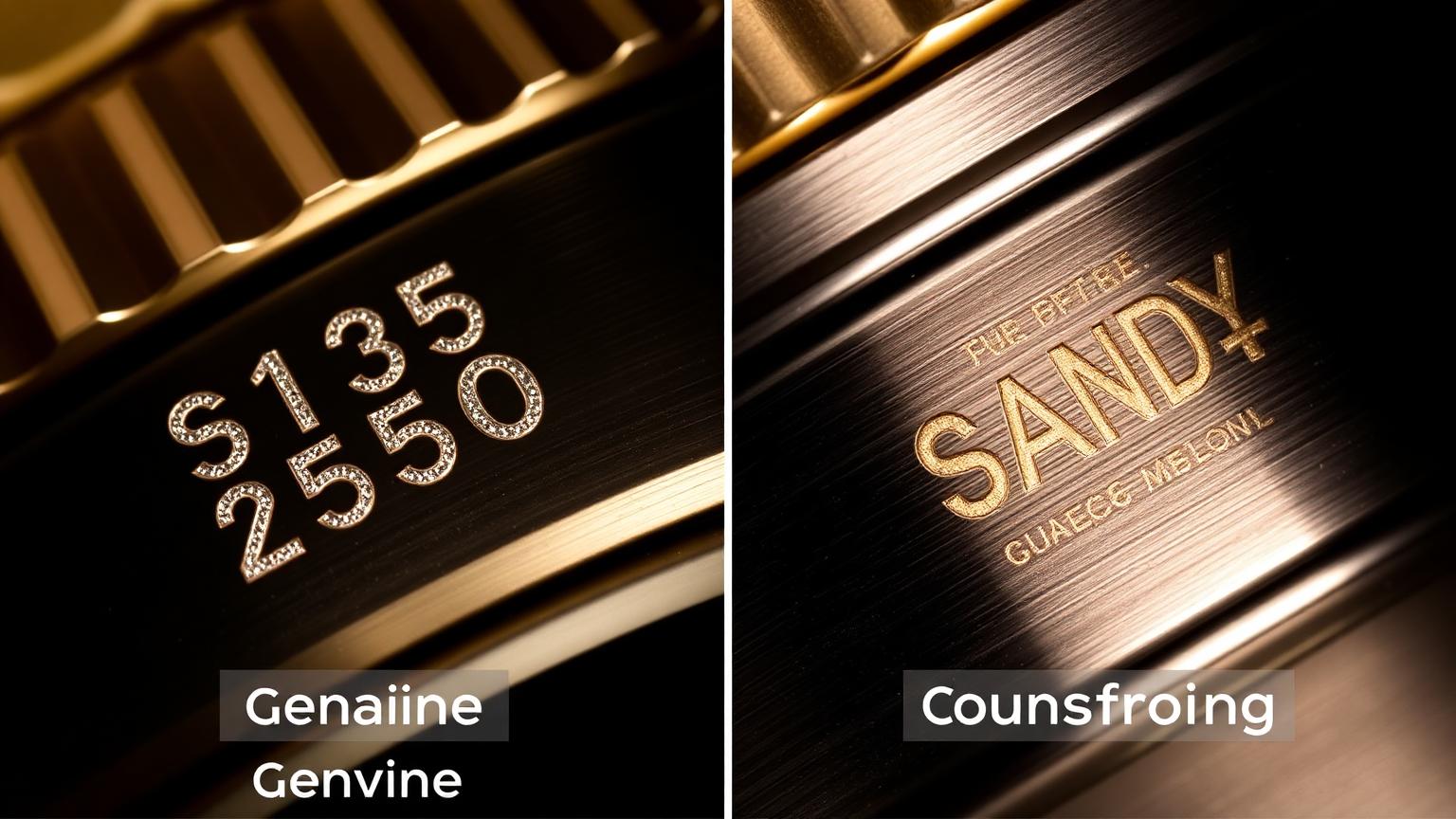
Ask for two non-negotiable macro photos under raking light: the rehaut engraving (the ROLEXROLEXROLEX ring) and the serial at 6 o'clock. Then check the execution. Rolex cuts serials with a diamond tool, shine a light and the inside of each character should sparkle and throw light back like a prism. Counterfeiters typically acid-etch or use standard lasers, which leaves the numbers looking flat, sandy, grey, or fuzzy at the edges. Genuine numbers sparkle; fake numbers absorb light. This check alone catches a huge share of fakes in seconds.
Step 3: The rehaut geometry test
This is where even good clones stumble, because it's a math problem, not a craftsmanship problem. On a genuine modern Rolex the rehaut engraving follows a strict grid. Right side (1 to 5 o'clock): the X of each ROLEX aligns with the minute markers. Left side (7 to 11 o'clock): the R aligns. 12 o'clock: the coronet is centered, and there's a break in the pattern at 6 o'clock for the serial. If ROLEXROLEXROLEX runs unbroken all the way around with no serial at the bottom, it's a cheap fake, full stop. Genuine watches can show minor imperfection here, but consistent drift as you move around the dial is the fingerprint of a lower-tolerance CNC machine. Rolex does not do wonky.
Step 4: The micro-etched coronet and the Cyclops
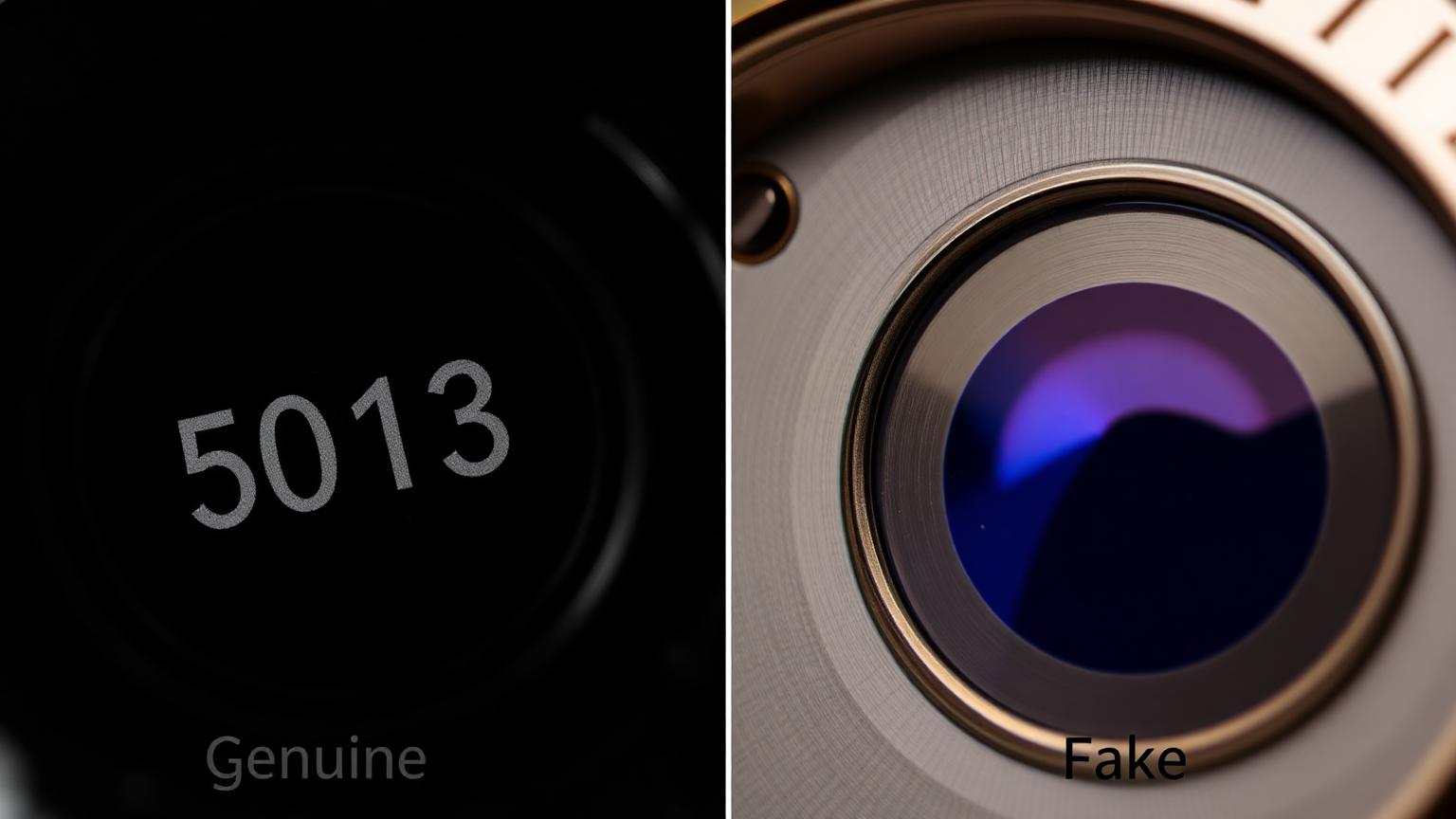
Since roughly 2001 to 2002, Rolex has laser-etched a microscopic crown into the sapphire crystal at 6 o'clock. The key word is hidden, on a genuine watch you need a loupe, macro lens, or strong directional light to find it. If you can see the crown easily with the naked eye, that's actually a red flag: it means someone over-accentuated it. The Cyclops over the date should magnify exactly 2.5x, filling the window with sharp, centered numerals. Cheaper fakes manage only 1.2x to 1.5x, so the date looks small and distant. Then tilt the watch under light: genuine Rolexes have an anti-reflective coating under the Cyclops that produces a dark black hole while the main crystal glares. Fakes often throw a telltale blue or purple tint at an angle.
Step 5: The movement, the last honest frontier
If a watch clears the first four checks and you still have doubt, the answer is inside. A superclone that passes external inspection is usually a Frankenwatch, a genuine case assembled with fake internals, or vice versa. Opening the caseback lets a watchmaker read the caliber. The tells that used to be external (sweep rate, date snap, rotor sound, weight) are now all reproduced, so they're only confirmation checks. The real differentiators live in the movement architecture: Rolex's free-sprung balance and, above all, the Parachrom Blue hairspring, a proprietary Nb-Zr paramagnetic alloy that the clone factories have not been able to replicate. This is why it sweeps smoothly and feels heavy is no longer proof of anything.
Other quick tells worth knowing
Lume: genuine Chromalight glows a clean blue and lasts through the night. Weak, green, patchy, or fast-fading lume points to a fake. Dial text: under a loupe, genuine printing is razor-sharp and slightly raised. Fuzzy or flat text is a warning. Fluted bezels: real fluted Rolex bezels are solid gold and extremely shiny; steel fakes smudge and show fingerprints far more. Dial vocabulary: Rolex never prints Quartz on a dial unless it's part of Oysterquartz. Cellini models never have lume or a date window. Box and papers can be, and routinely are, faked. A convincing card next to a bad watch means nothing; conversely a real watch can arrive in a fake box.
The bottom line
Authentication in 2026 is a hierarchy, not a feeling. Price the watch, verify the serial and its location, run the rehaut geometry, check the hidden coronet and Cyclops, and if any doubt survives, inspect the movement. Everything else is confirmation. When the numbers are large and the stakes are real, pay the $50 to $200 for professional authentication. It is the cheapest part of the whole transaction.